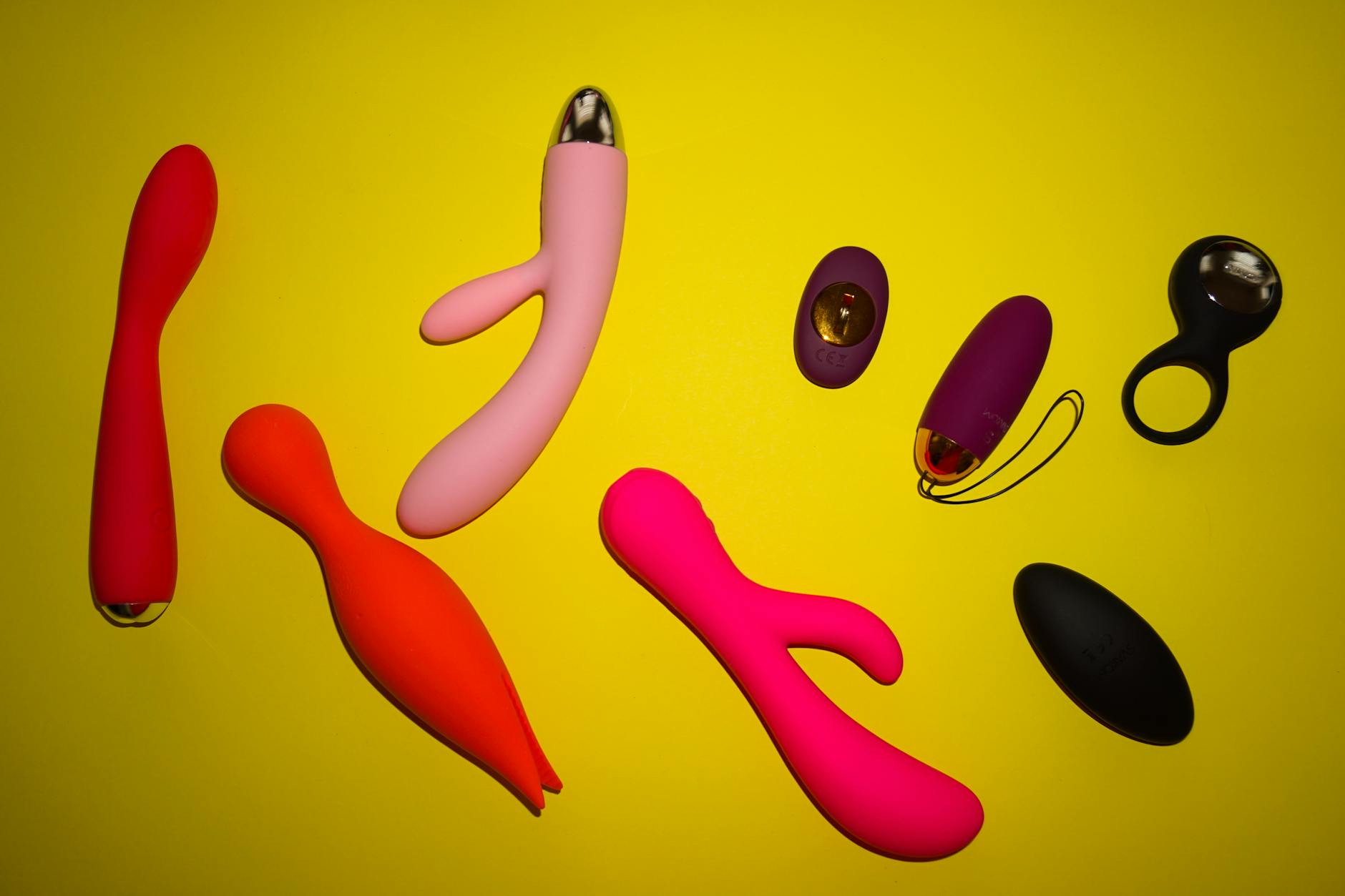
Here's what nobody talks about
One of you is ready in five minutes. The other needs twenty. One of you loves intense buzz; the other finds it almost painful. You're not broken. You're not incompatible. You're just operating at different speeds. And honestly? That's the setup where the right lemon vibrator stops being a solo tool and becomes the bridge that actually works.
I've worked with hundreds of couples navigating this exact friction point. Most of them assumed the problem was desire or connection. It wasn't. It was rhythm.
Why lemon vibrators actually solve the speed-matching problem
Clitoral vibrators like those from Helo Nancy's Lemon do something that bodies alone can't: they create consistent, controllable stimulation independent of what's happening with penetration or manual touch. That matters when you're moving at different tempos.
Here's the real advantage. When a partner with a faster arousal arc uses a lemon vibrator on their slower-heating partner, two things happen simultaneously. The faster person stays engaged (no dead time waiting). The slower person gets sustained sensation that builds predictably. Neither person is performing a tired gesture toward the other. Both are getting actual stimulation.
The key is choosing a tool that has enough range. If your vibrator only goes 1-3, and one of you needs patterns 5-8 to feel anything, you've still got a mismatch problem.
The multi-setting factor (why it matters more than you think)
Most lemon sexual toys come with multiple intensities, and that's the feature that actually does the heavy lifting for couples with different needs. But here's what I see couples miss: they assume they're for variety within a single session. They're not thinking about baseline compatibility.
If you're the person who needs longer warm-up, you start at intensity 1 or 2. Your partner, who gets stimulated faster, has room to build to intensity 4, 5, or higher without you feeling abandoned at a low setting. You're both on the same device, but at a level that works for your nervous system. That's not compromise. That's engineering for actual pleasure.
Look for lem vibrators with at least five distinct intensity levels, or patterns that let the user start gentle. The Helo Nancy's Lemon range includes options with graduated settings specifically designed for this kind of dual-pacing.
When speed mismatch shows up as disconnection
Here's the pattern I see most often. The slower-heating partner feels pressure to perform faster arousal they don't feel. The faster-heating partner feels resentful about waiting. Sex becomes this anxious negotiation instead of mutual pleasure. Over time, that anxiety actually slows down the slower person further, and the faster person pulls back more. It's a feedback loop.
A clitoral vibrator doesn't fix the relationship dynamic, but it does interrupt that loop. It says: your body is fine as it is. You don't need to speed up. You don't need to slow down. Here's consistent sensation that works with your timeline.
When that pressure lifts, I watch couples relax back into actual desire. Turns out a lot of what looked like low sex drive was just nervous system exhaustion from constant negotiation.
The physical features that actually change the outcome
Not all lemon vibrators are equal when you're shopping for two different bodies. Here's what to check.
Waterproof design. For couples, waterproof matters because you're using the toy in varied contexts. A shower between rounds, sweat, lube residue. If it's waterproof, it travels seamlessly. If it's not, you're managing maintenance during intimacy, which kills the vibe (literally).
Flexible or angled tip. A vibrator that reaches the clitoris easily regardless of body position matters when you're navigating two different arousal paces. Straight vibrators force a specific angle. Angled or flexible ones adapt to the person's natural anatomy, which means less adjustment and more sensation.
Motor that doesn't buzz down under pressure. Some vibrators lose power when you apply firm pressure. If the faster-heating person likes strong stimulation, a motor that stutters under pressure is frustrating. The Lem vibrator specifically holds intensity even with firm application.
Rechargeable over battery. Couples tend to use toys more spontaneously. A rechargeable lem vibrator means you're never in the middle of sex realizing the batteries died two days ago.
How to actually use one as a couple when speeds don't match
The structure matters more than you'd think. Here's what works.
Start together with the slowest setting. The person who heats up faster will feel like they're barely starting. The person who needs warm-up won't feel invaded. Spend five to ten minutes here. This is not foreplay you're rushing through. This is the actual beginning.
Then, gradually dial up. The faster-heating person can increase intensity. The slower person adjusts at their own pace or stays where they are. They're moving in tandem but not locked together. That asynchrony is the whole point.
If one of you wants to use it solo while the other watches, that's not a sign something's wrong. That's actually the setup where many couples finally sync. You can stimulate yourself at the pace that works for you while staying present and connected to your partner. Watching is intimacy. It's not a substitute for participation. It's a form of it.
Common mistakes couples make (and how to avoid them)
Mistake one: assuming a vibrator is for the slower-heating person only. Both of you might get pleasure from it. Clitoral vibrators feel good on multiple body types, and using one together (one person applying it, both people enjoying sensation) is not role-specific. Try it both ways.
Mistake two: using it as a workaround instead of addressing actual speed differences. A vibrator helps manage incompatible timelines. It doesn't fix a situation where one person wants sex twice a week and the other wants it twice a month. That's a different conversation. The vibrator is for the physical pacing, not the frequency negotiation.
Mistake three: picking the cheapest option and assuming vibrators are interchangeable. They're not. A poorly designed clitoral vibrator can actually create frustration if the intensity doesn't match what your body needs, the motor cuts out under pressure, or the battery dies mid-use. Spending an extra thirty dollars on a reliable lem vibrator from Helo Nancy's Lemon is the difference between a tool that works and one that feels like a gimmick.
Mistake four: never talking about it. The fact that you bought a lemon sexual toy for couples use doesn't mean you both automatically understand why it's there. "I got this because I love how you move and I want us to have fun together without that time pressure" is a conversation worth having. It reframes the toy as a relationship investment, not a patch over a problem.
When to introduce it (and when to wait)
If your relationship is already solid but you're managing different arousal speeds, now is exactly the time. This is a tools question, not a connection question.
If there's tension around frequency or desire, introduce a vibrator after you've had an actual conversation about what's driving the mismatch. Sometimes slower arousal is lower desire. Sometimes it's just a different nervous system. A lem vibrator can't tell the difference, so you need to know before the toy arrives.
If you're both eager to try something together and this feels exciting rather than like a fix, go for it. Curiosity and joy are good starting conditions.
FAQ: Lemon Vibrators and Couples With Mismatched Speeds
Does using a vibrator together mean we're not attracted to each other?
No. A vibrator is a tool that creates consistent sensation independent of hand fatigue, positioning, or arousal momentum. Couples who are deeply attracted to each other use vibrators because they want mutual pleasure, not because something's missing. It's actually the opposite. It's an investment in feeling good together.
What if only one of us wants to use it?
That's completely fine. One person can use the lemon clitoral vibrator during partnered sex while the other engages differently. You're not obligated to use toys the same way. In fact, many couples find the most connected sex happens when each person is getting exactly the stimulation they need, even if those needs look different.
Can a lemon vibrator actually bridge a big arousal gap?
It can help manage the pacing, which often feels like it bridges the gap. If you're the slower person and you're getting sustained clitoral stimulation instead of waiting around, the actual experience of sex changes. If you're the faster person and you don't have dead time, you stay present. That presence often creates better intimacy than you'd have without the tool.
How do we talk about this without it feeling awkward?
Start with what you want, not what's wrong. "I want us to feel good together and I think this could work for us because..." lands differently than "We have a problem I want to fix." You're not diagnosing a dysfunction. You're adding an option.
Is there a best lemon vibrator for couples specifically?
Look for graduated intensities (at least 5 levels), reliable motor performance, waterproof design, and ergonomic shaping. The Lem vibrator from Helo Nancy's Lemon checks all those boxes and is designed for exactly this kind of shared use. It's quieter than some options, which matters if you're not solo. It holds intensity under pressure, which matters if you're both using it. Start there.
What if we try it and it doesn't work?
Then it doesn't work for you right now. That's data, not failure. Some couples click immediately with vibrators. Others need time to get comfortable. Some find they prefer other tools. Try it a few times in low-pressure situations. Pay attention to what feels good and what doesn't. If it's not landing, you haven't wasted much. If it does, you've unlocked something useful.
The actual payoff
I've watched couples who were stuck in this speed-mismatch loop finally relax once they had a shared tool that worked for both of them. Sex stopped being this anxious negotiation and became something they both wanted. That shift isn't about the vibrator itself. It's about removing a constant low-level friction that was masquerading as a desire problem.
You don't need a lemon vibrator to have good sex with mismatched arousal speeds. But if you're curious, it's worth trying. The best tools are the ones that let you be exactly who you are and still feel connected. That's what this one does.