Here's the conversation nobody's having
Antidepressants save lives. They also kill orgasms. One doesn't negate the other. Both things are true, and both matter when you're trying to figure out why pleasure feels like it's happening behind a thick pane of glass.
Sexual dysfunction from SSRIs (selective serotonin reuptake inhibitors) affects roughly 40 to 60 percent of people taking them. It's not a character flaw or proof that your depression is winning. It's a direct neurochemical side effect. And there are workarounds that actually work.
What antidepressants do to sensation
SSRIs like sertraline, paroxetine, and fluoxetine work by keeping serotonin in your brain longer. Serotonin affects mood, but it also regulates dopamine and norepinephrine. Those two chemicals are your actual arousal system. When serotonin is high, dopamine and norepinephrine get suppressed. Result: your brain doesn't register desire the way it used to, and physical sensation feels muted.
It's not that your nerves stopped working. It's that your brain stopped amplifying the signal. Imagine trying to feel raindrops through a winter coat.
Many people also experience delayed orgasm or no orgasm at all. Some report that their genitals feel numb or detached, almost like they're happening to someone else. Others notice that arousal takes much longer to build and never quite reaches the same peak. All of these are documented SSRI side effects.
The tricky part: talking to your doctor about this often feels like complaining about a problem they'll "fix" by lowering your dose or switching you to a different class of drug. Sometimes that's the right move. Usually, you want to stay on what's working for your mental health.
Why lemon vibrators work differently
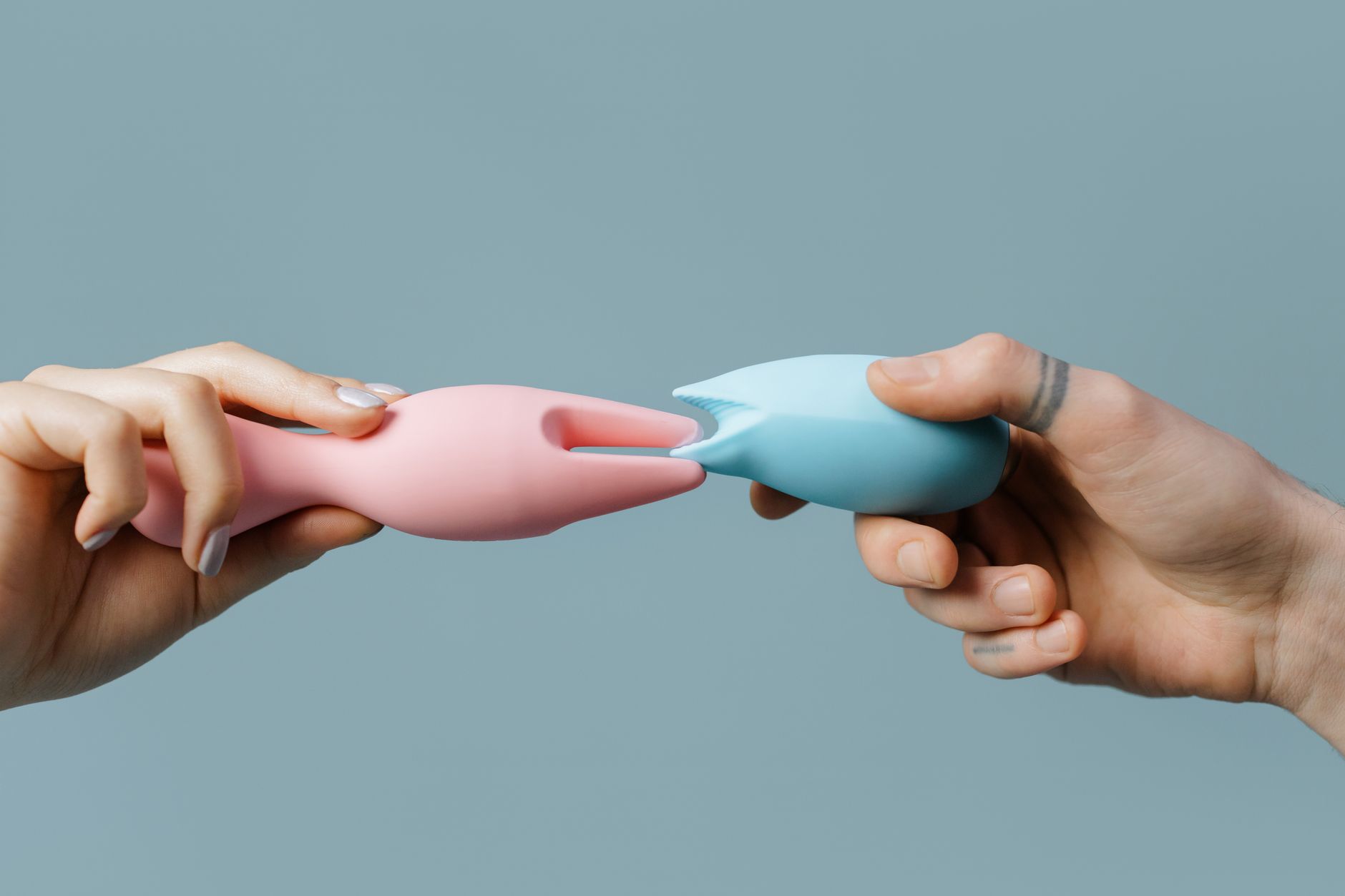
Here's where Helo Nancy's Lemon lemon clitoral vibrators change the equation.
Manual stimulation relies on your brain to interpret subtle pressure changes and turn them into arousal signals. When antidepressants are dampening that signal, subtle doesn't cut it. You need intensity that can break through the numbness without causing pain or irritation.
Clitoral vibrators like the Lem use air-suction technology, which creates a sustained, strong sensation that doesn't depend on your brain's baseline sensitivity to register pleasure. You're not relying on sensation traveling from your clitoris up to your brain through a compromised pathway. You're creating a sensation powerful enough that the numbness becomes almost irrelevant.
Think of it this way: if you're trying to hear a conversation through earplugs, turning up the volume works better than asking someone to speak more clearly.
Why suction works better than vibration for you
Lemon vibrators use suction, not just vibration. The difference is neurological.
Vibration relies on rapid pressure changes that need to be picked up by your sensory receptors and sent to your brain as distinct events. When your serotonin levels are high, your brain is filtering those signals. Vibration feels present but disconnected, like you're watching it happen rather than feeling it.
Suction creates a sustained pressure that's harder for your brain to ignore. It's a stronger, more localized sensation that pushes through the numbness. Many people on SSRIs report that suction feels "real" in a way vibration alone doesn't. It's the difference between a light touch you're not sure you felt and a pull you can't miss.
The Lem, designed specifically for clitoral stimulation, combines gentle suction with soft pulsing. That combination works especially well for people whose sensation is chemically dampened because it creates dual input. Your brain has to register both the pressure and the pulse.
Starting with lemon clitoral vibrators when you're on antidepressants
Four things to know before you begin:
Start with medium intensity. If you jump straight to the highest setting, you'll either numb yourself further or create irritation. The point isn't to brute-force pleasure. It's to use consistent, focused sensation to wake up the pathway. Medium intensity (pattern 3 or 4 on the Lem) gives your body room to respond without overwhelming it.
Give it time. Pleasure under antidepressants doesn't snap back on. It builds. Most people need 15 to 20 minutes before they feel anything at all. Some need 25 or 30. Budget that time and don't treat it as a failure if you're not responding quickly. Your brain is rerouting, not suddenly improving.
Lubrication matters more than you think. Even though suction doesn't create the same friction as vibration, the area where the cup contacts your skin needs to be either slightly damp or dry enough to create a seal. Test both and see what your body prefers. Some people find that a tiny drop of saliva works. Others prefer no additional lubrication.
Track what works. SSRI sexual side effects are unpredictable day to day. Sometimes hormonal cycles shift how you respond. Sometimes the specific SSRI you're on makes certain types of stimulation impossible. Keep a simple note of what intensity, what time of day, and what kind of foreplay led to the best response. That becomes your roadmap.
The partnership conversation nobody wants to have
If you're in a relationship, there's a secondary layer of numbness happening. Physical sensation is dampened, sure. But emotional vulnerability around that dampness is a whole different problem.
Many people on SSRIs feel shame about the sexual side effects, as if the medication is "ruining" things for their partner. Partners sometimes feel rejected or worried that reduced sexual interest is about the relationship, not the chemistry.
Here's the honest part: using a lemon clitoral vibrator is not a workaround that makes sex "normal" again. It's a different way to access pleasure that works better with your current biology. If you're using it alone, that's fine. If you're using it with a partner, that conversation needs to happen before the toy is involved.
The frame that works best: "Antidepressants changed how my body responds. This tool is designed to work with that change, not around it. I want to use it because it actually feels good, not because anything is broken."
When to talk to your doctor
If you're experiencing sexual side effects from antidepressants and your mental health is stable, you have options worth discussing.
Some doctors recommend adding a medication like bupropion, which works differently and sometimes counteracts SSRI sexual side effects. Others suggest taking a "medication holiday" (skipping your dose before sex), which works for some people and creates withdrawal symptoms for others.
The conversation to have: "I want to stay on this medication because it's helping my depression. I'm exploring tools and techniques to manage the sexual side effects. What do you think about adding bupropion, or is there anything else you'd recommend?"
If your doctor acts like sexual side effects aren't important, find a different doctor. This is a real quality-of-life issue, and it's worth treating seriously.
The thing about numbness that nobody mentions
When antidepressants numb your sensation, they're also protecting you from something. Depression and anxiety were probably making you feel too much before. Now you're not feeling enough. Neither extreme is sustainable, but both serve a purpose.
Using lemon vibrators or any other tool to restore pleasure isn't about going back to normal. It's about finding a new equilibrium where you're on medication that works for your mental health and using tools that work for your body's current capacity.
That middle ground exists. It just takes patience and honesty about what you're actually feeling versus what you think you should feel.
Questions people actually ask
Does the numbness from antidepressants ever go away?
It depends. For some people, their body adjusts after six to twelve months on the same dose. Others stay numb the entire time they're on SSRIs. The numbness typically reverses after you stop the medication, but that reversal can take weeks or months. If you've been on antidepressants for years, restoring sensation is a gradual process. Lemon clitoral vibrators accelerate that process because they're creating stimulation strong enough to reach through the dampening.
Can switching to a different antidepressant help?
Yes, sometimes. Bupropion, mirtazapine, and some other classes of antidepressants have lower rates of sexual side effects than SSRIs. Talk to your prescriber about whether a switch makes sense for your situation. Don't stop your current medication on your own. If you're going to switch, do it with medical support.
Will using a lemon vibrator make my sensation worse?
No. Regular stimulation, especially with tools designed for effectiveness, can actually help your sensory pathways stay active. You're not making yourself more numb. If anything, you're keeping the arousal system engaged even while antidepressants are dampening it. That's protective, not harmful.
How long before I feel something with a lemon clitoral vibrator?
Most people report noticing something (even if it's just "this is a strong sensation") within the first few uses. Actually enjoying it usually takes longer. Three to five sessions is a reasonable window for your body to start translating the sensation into something pleasurable. Be patient with yourself.
Is it normal to need a higher intensity because of antidepressants?
Completely normal. Antidepressants are suppressing your dopamine and norepinephrine signals. Those suppressed signals mean you need more intense input to register the same amount of pleasure. That's not weakness. It's just how the chemistry works.
Should I tell my partner I'm using a vibrator because of my medication?
That's your call, but here's my take: transparency helps. If you're using a lemon vibrator solo, you don't owe anyone an explanation. If it's something you want to incorporate into partnered sex, the conversation matters. Frame it as a tool that helps you reconnect with sensation, not as a replacement for your partner. Many couples find that introducing a vibrator actually deepens intimacy because it removes the pressure of manual stimulation having to be enough.
Antidepressants gave you your mind back. Now it's time to reclaim the rest of your body. Lemon vibrators aren't magic, but they're designed to work with the reality of what SSRIs do to sensation. That's enough. Start with medium intensity, give yourself time, and remember that rebuilding pleasure is a process, not a destination.
If you have questions about how the Lem might work for your specific situation, reach out to us. We're here to help you find what actually works.