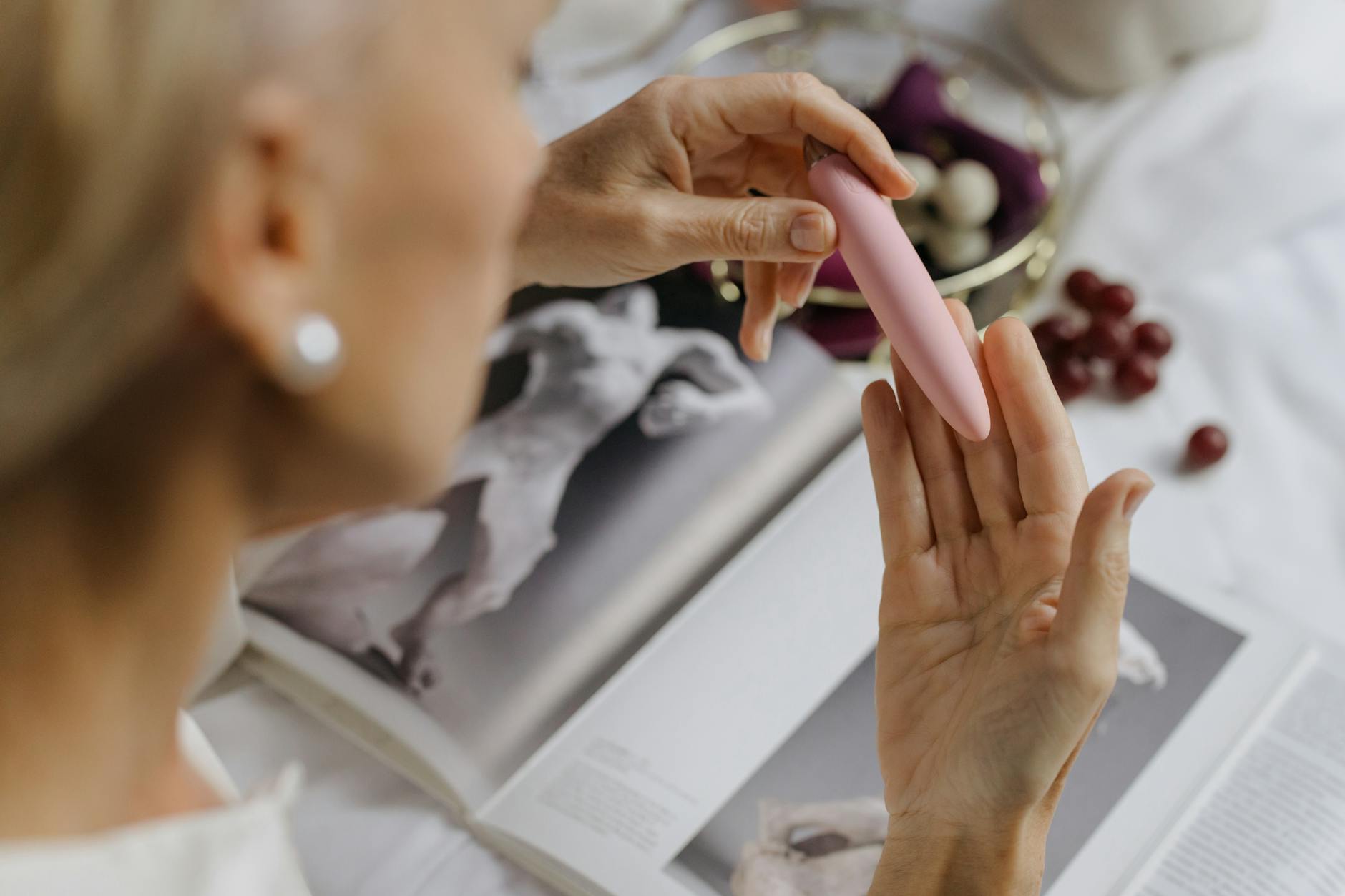
Let's talk about lubrication, because nobody does
If you've noticed that sex feels different after 40, you're not imagining it. Vaginal lubrication decreases with age, and not in a way that most people openly discuss. The tissues thin, they produce less natural moisture, and friction that used to feel good can start to feel uncomfortable. This isn't a sign you're broken. It's biology.
Here's the thing that changes everything: not all vibrators handle decreased lubrication the same way. Traditional vibrators rely on friction against tissue, which becomes uncomfortable when natural lubrication drops. Air-suction lemon clitoral vibrators work on a completely different principle. They use gentle suction and pulsing patterns that stimulate without requiring the same level of direct friction. For people dealing with age-related lubrication changes, this distinction isn't minor. It's the difference between dreading sex and enjoying it again.
Why lubrication actually decreases with age
Estrogen plays a starring role here. As estrogen levels drop (whether through natural aging, perimenopause, or surgical menopause), vaginal tissue becomes thinner and produces less of the glycogen that feeds healthy bacteria. That bacterial environment is what creates lubrication. Less favorable conditions for bacteria means less lubrication.
But estrogen isn't the only factor. Blood flow matters too. Reduced cardiovascular fitness, certain medications, stress, and dehydration all impact how much blood reaches genital tissue during arousal. Less blood flow means slower arousal and less lubrication production.
This is why some people notice lubrication changes starting in their late 30s, while others don't see real shifts until their 50s or beyond. Genetics, overall health, stress levels, and whether you're in a relationship all influence the timeline.
Why traditional vibrators become harder to use
Most vibrators work by direct friction. The motor vibrates, your tissues vibrate in response, and that mechanical stimulation builds arousal and leads to orgasm. When there's plenty of natural lubrication, this works beautifully.
When lubrication decreases, several things happen. First, friction increases. That can feel sharp or uncomfortable instead of pleasurable. Second, the tissue dries faster because there's less moisture to sustain the experience. Third, you might end up using more pressure to compensate for decreased sensation, which can irritate tissue further.
Many people respond by adding lube, which helps. But adding lube changes the feeling and requires reapplication partway through. It's an extra step that shifts the energy away from pleasure.
How lemon clitoral vibrators work differently
Lemon vibrators, including models like the Lem vibrator, use air-suction technology instead of direct vibration. Here's how that changes the equation.
Air suction creates a gentle seal around the clitoris and uses pulsing patterns to stimulate the thousands of nerve endings there. This approach doesn't rely on friction between the toy and your tissue. Instead, it stimulates through pressure and suction. This matters enormously when natural lubrication is lower because there's no friction component at all.
The Lem vibrator and similar lemon sucker devices can work beautifully with water-based lubricant, but they don't require heavy lubrication to function. The suction creates its own kind of glide. Many people with decreased lubrication find that lemon clitoral vibrators feel more comfortable than traditional vibrators because they eliminate the friction equation entirely.
The practical differences you'll notice
If you've been using traditional vibrators and you're experiencing decreased lubrication, switching to a lemon clitoral vibrator will feel noticeably different. Here's what to expect.
First, sensation arrives faster. Because suction stimulates without friction, you don't need to warm up with as much direct contact. Many people with decreased lubrication find that the Lem vibrator or similar air-suction devices build arousal more quickly because the stimulation is more concentrated on the nerve-rich clitoral area.
Second, you won't experience that drying-out feeling mid-session. Traditional vibrators can actually increase dryness through friction. Lemon vibrators maintain the same level of sensation throughout because they're not dependent on maintaining a layer of moisture.
Third, orgasms often feel sharper and more focused. The suction concentrates stimulation in a smaller area, which for many people translates to more intense sensation. This is especially valuable if decreased lubrication has also meant decreased sensation overall.
How to use lemon vibrators when lubrication is low
Here are the adjustments I recommend for anyone transitioning to lemon clitoral vibrators during this life stage.
Start with a small amount of water-based lubricant. You don't need much. A quarter-teaspoon on the toy's opening is plenty. This helps the suction seal form without the sticky feeling that comes from heavy lubrication.
Begin on a lower intensity setting. Lemon sucker devices concentrate stimulation, which can feel intense. If you're used to the diffuse stimulation of a traditional vibrator, patterns 2 or 3 on the Lem vibrator are usually the right starting place. You can always increase, but jumping into high intensity can feel overwhelming.
Budget more warm-up time than you think you need. Even though lemon clitoral vibrators build sensation quickly, your arousal system still needs time. Spend 10-15 minutes on foreplay, self-touch, or fantasy before turning on the toy. Your body will respond more readily.
Experiment with different contact points. The Lem vibrator works best when it's making full contact with the clitoral area, but slight positioning changes can shift which nerve clusters receive the most stimulation. Small adjustments often unlock sensations that feel completely different.
When to use lube, and when to skip it
This confuses a lot of people, so let's get specific. Water-based lubricant helps lemon vibrators create a better suction seal, which is why I recommend a tiny bit. But you don't need enough to feel slick or wet.
Silicone-based lubes are off the table with the Lem vibrator and other silicone toys because they degrade the material. Stick with water-based options like Astroglide or Slippery Stuff.
Some people find that starting without any lube, then adding a small amount after a few minutes of stimulation, works best. Your body produces some moisture even if the amount feels reduced compared to your younger years. Starting without lube lets you gauge your natural response, then you add a bit if you want more glide.
Honestly, most people with decreased lubrication find they need less lube with lemon clitoral vibrators than they would with traditional vibrators. That's one of the biggest practical advantages.
The emotional piece nobody talks about
Dealing with decreased lubrication can feel like your body's betraying you. Sex used to feel spontaneous and easy. Now it requires planning, lube, positioning, patience. That shift can make people feel older or less desirable.
Here's what I want you to know. Decreased lubrication isn't a personal failing. It's not a sign that your sexuality is dimming. It's a straightforward physiological change that has straightforward solutions. Many people find that once they switch to lemon clitoral vibrators and adjust their approach, sex feels better than it did in their 30s because there's less pressure, more permission, and better tools.
Your pleasure isn't going anywhere. The pathway just shifted.
FAQ
Can I use a lemon vibrator if my lubrication is significantly decreased?
Absolutely. In fact, lemon vibrators like the Lem vibrator are often easier to use when natural lubrication is lower because they don't rely on friction. A small amount of water-based lubricant helps create a good suction seal, but you won't need the heavy lubrication that traditional vibrators might require. Start with less than you think you need.
Do I need to use lubricant with air-suction lemon clitoral vibrators?
Not necessarily. Some people use a small amount of water-based lube to improve the suction seal and comfort. Others find that their natural moisture, even if reduced, is enough. Experiment to see what feels best. The advantage of lemon suckers is that they work well across a range of lubrication levels, unlike traditional vibrators which struggle when lubrication is minimal.
Will a lemon vibrator feel different if I've always used traditional vibrators?
Yes. The sensation is more concentrated and focused because suction stimulates a smaller nerve-rich area. If you're used to the broader, vibrating sensation of traditional vibrators, it will feel sharper and more intense. This is often described as more satisfying, especially when sensation has decreased due to aging or decreased lubrication. Start on a lower setting to acclimate.
Is decreased lubrication a sign that something is medically wrong?
Not necessarily. Natural lubrication decreases with age due to changes in estrogen and blood flow. It's a normal part of aging. However, if lubrication changes suddenly, or if you're experiencing pain, see a gynecologist. Genitourinary syndrome of menopause (GSM) is common and treatable with topical estrogen, but it needs professional evaluation.
How long does it take to adjust to using a lemon vibrator if I'm used to traditional vibrators?
Most people feel comfortable with air-suction lemon clitoral vibrators within 2-3 sessions. The sensation is different, so your nervous system needs time to recognize and anticipate the feeling. Start with lower intensity settings, use a small amount of lube if that feels right, and give yourself permission to explore without the pressure to orgasm on the first try. Your body will learn quickly.
Can a lemon sucker help if I'm on medications that decrease lubrication?
Many medications, especially antihistamines, antidepressants, and blood pressure medications, reduce lubrication as a side effect. Lemon vibrators can be particularly helpful because they don't require friction. Talk to your doctor about whether your medication is the culprit. If it is, you might have options like switching medications or adjusting timing. In the meantime, a lemon clitoral vibrator often works better than traditional vibrators under these circumstances.
What's actually happening in your body
Lubrication isn't just about comfort. It's an indicator of arousal, blood flow, and hormonal health. When it decreases, it's not because desire is disappearing. It's because the physical response to desire has shifted. Lemon clitoral vibrators bridge that gap beautifully because they stimulate without depending on the friction that requires heavy lubrication.
You're not broken. Your body's just operating under different conditions. The right tools, a little patience, and permission to explore what feels good now rather than what felt good ten years ago is all you need. That's where pleasure lives.
Ready to explore how a lemon vibrator might work for you? Get in touch with our team if you have questions about which Helo Nancy's Lemon product might be the best fit.