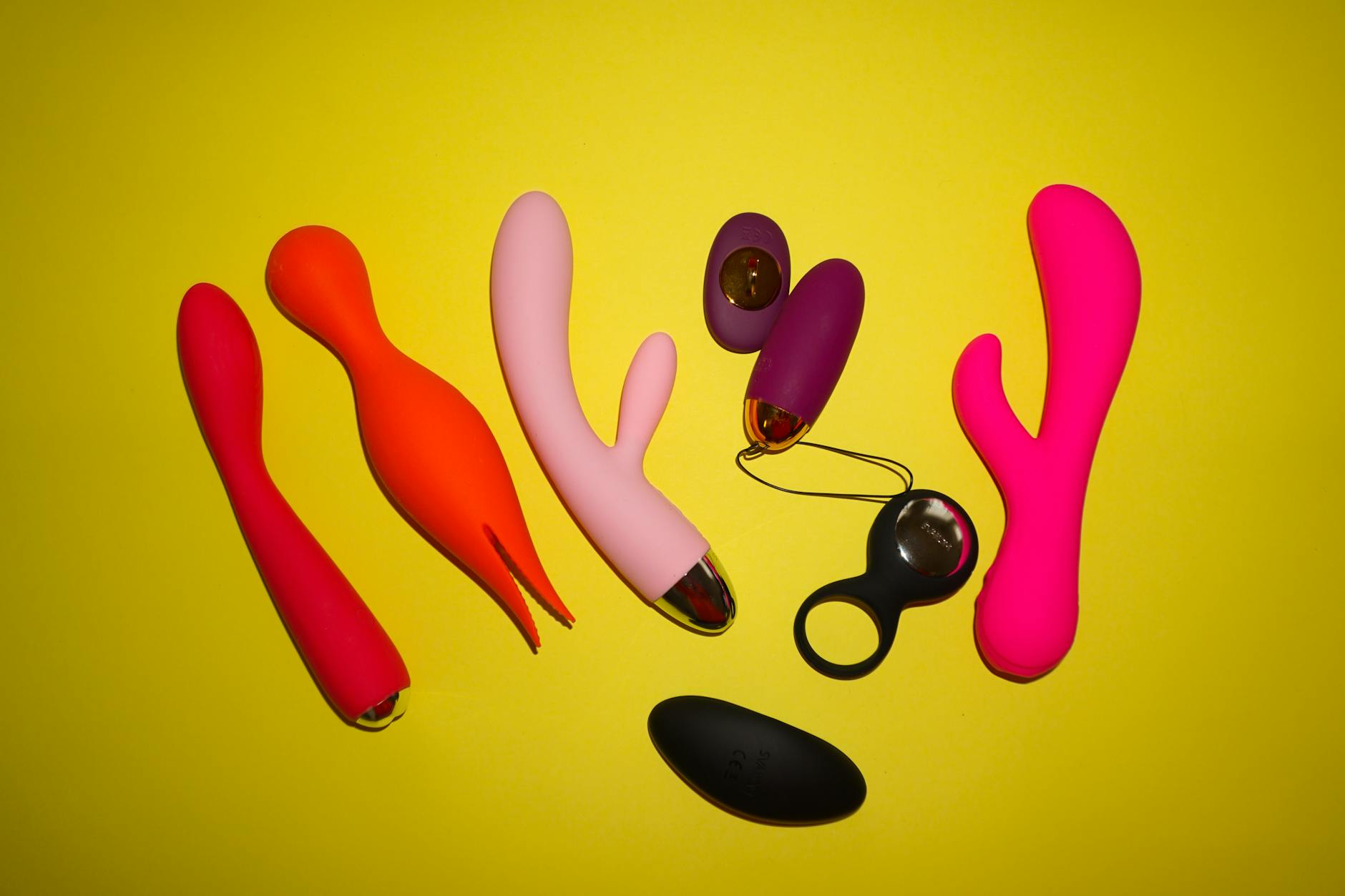
Let's talk about the medication trap nobody warns you about
You took an antidepressant or an antihistamine or a blood pressure med for a completely legitimate reason. Your mental health stabilized. Your allergies cleared. Your blood pressure normalized. And then, sometime around month two or three, you noticed that pleasure felt further away. Not gone. Quieter.
The sex toy you used to love doesn't hit the same. Your partner's touch feels fainter. Orgasms are harder to find or feel less intense when they do arrive. You might assume it's the medication, but you're not sure if that's even a real thing. It is. And it's way more common than you've been led to believe.
The actual mechanism behind medication numbness
Here's what's happening physiologically. Most antidepressants, antihistamines, and certain blood pressure medications work by modulating neurotransmitters like serotonin, dopamine, and norepinephrine. These same neurotransmitters are central to arousal, lubrication, and orgasm. When medication adjusts your brain chemistry to treat one thing, it often dulls the signaling for pleasure. That's not a side effect you imagined. It's neurochemistry.
The clitoris is extremely sensitive to neural changes. When dopamine and norepinephrine drop, the clitoris doesn't respond as quickly to traditional stimulation. A regular vibrator relies on friction and direct nerve activation. If the nerves are already operating at lower sensitivity, a normal vibrator simply doesn't reach the threshold. It's like trying to turn up the volume on a speaker that's already been quieted at the source.
Air suction vibrators like the lemon clitoral vibrator work fundamentally differently. Instead of friction, they create a gentle seal and pulse around the clitoral head, stimulating a much larger network of nerve endings at once. That simultaneous, broad activation is powerful enough to bypass some of the dampening effect of medication.
Why air suction feels different when you're on medication
Think of it this way. A traditional vibrator is knocking on the door. A lemon vibrator is opening the whole house to sound. The sheer volume of neural input makes it harder for medication to suppress the signal entirely.
When you're on an SSRI like sertraline or escitalopram, or on an antihistamine like cetirizine, the neural firing rate is lower overall. You need more stimulation intensity to reach the same pleasure threshold. A lemon clitoral vibrator delivers that intensity without feeling harsh or uncomfortable. The suction creates a broader, gentler sensation than a wand or bullet, which means it can work harder without irritating sensitive tissue.
I've had clients report that they couldn't orgasm at all for six months on a new medication, then switched to a lemon vibrator and reconnected within two sessions. That's not magic. That's neuroscience.
The timeline of medication numbing (and when to expect changes)
Most medication-related pleasure changes happen within two to four weeks of starting a new drug. Your body adjusts to the chemical shift, and so does your sexual response. The numbness typically plateaus after about six weeks. It doesn't get worse; it just stays at that lower baseline.
Here's what matters: this does not mean you're broken. Your neural capacity for pleasure is intact. The signal is just being broadcast at lower volume.
If you're three months in and hoping it will pass on its own, it usually won't. Your nervous system has adapted to the medication. You need a tool that meets you where you are now, not where you were before.
How to restart sensation with a lemon vibrator when you're on medication
Four practical steps:
Start at intensity level two or three. The lemon vibrator has seven intensity settings. If you've been numb for months, the instinct is to go high immediately. Resist. Start low and feel what activates. You're retraining your nervous system to recognize pleasure.
Use it solo first. When you're reconnecting with sensation, partner dynamics add emotional weight. Pleasure solo is simpler. Give yourself permission to explore without performance pressure.
Give it five sessions minimum. Medication numbing isn't reversed in one use. Think of this like restoring a muscle. The first session wakes it up. Sessions two through five build the response. By session six or seven, most people report significant reconnection.
Apply light pressure and hold steady. The lemon vibrator doesn't need to move in patterns. Find the spot, set it, and let the suction and pulse do the work. This is different from traditional vibrators where movement and angle matter. Air suction works best when you're still.
When medication changes are worth discussing with your prescriber
If pleasure numbness is significantly affecting your quality of life or your relationship, that's worth mentioning to your doctor. This doesn't mean stopping the medication. It means a few legitimate conversations.
Some medications have less sexual side effects than others. Your doctor might be able to switch you to an alternative antidepressant or antihistamine that works equally well but with fewer pleasure effects. Timing the dose (taking it at night instead of morning) sometimes helps. Dose adjustment occasionally reduces the sexual side effect while keeping the therapeutic benefit.
There are also medications that actively counteract numbing. If you're on an SSRI and struggling with pleasure, adding bupropion sometimes helps because it works on dopamine pathways the SSRI doesn't touch. This isn't something you should try without your prescriber, but it's a real option that exists.
The lemon vibrator as a bridge, not a workaround
I want to be clear about what I'm saying. A lemon clitoral vibrator is not a cure for medication numbing. It's a tool that works with your current neurochemistry instead of against it. It acknowledges that your medication is doing something important for your mental health, and that your pleasure matters too. Those things aren't in conflict.
Most of my clients who've used a lemon vibrator while managing medication-related numbness report that reconnecting with sensation took three to six weeks of regular use. Some reconnect to the ability to orgasm. Others reconnect to the ability to feel arousal building, which had disappeared entirely. All of them say the same thing: it reminded them that the capacity was still there.
You didn't lose your pleasure. The signal got quieter. The right tool can turn the volume back up.
Combining medication conversation with pleasure exploration
Here's what I recommend if you're navigating this. First, talk to your prescriber. Not to apologize, not as a complaint, but as information. "I'm noticing pleasure changes since starting this medication. What are my options?" That opens a real conversation.
Second, don't wait for your doctor's answer to start exploring with a lemon vibrator. You're not choosing between medication and pleasure. You're choosing your mental health and your pleasure. A lemon clitoral vibrator is a legitimate part of that both-and approach.
Third, give yourself grace. Reconnecting sensation after months of numbness is real work. It's not instant. But it is possible, and it happens far more often than you'd expect.
FAQ: Medication, sensation, and lemon vibrators
Can I use a lemon vibrator if I'm on multiple medications that affect sensation?
Yes. In fact, people on multiple medications often find air suction vibrators more effective than traditional toys because the combined effect of medications creates deeper numbness. A lemon vibrator's broad neural activation can cut through that more reliably. Start conservative with intensity and adjust from there.
How long does it take to feel a difference after starting with a lemon vibrator?
Most people report some shift within three to five sessions. By week three of regular use, reconnection is usually noticeable. That said, if you've been numb for a long time, patience matters. Your nervous system is learning to respond again.
Does sensitivity improve if I stop the medication?
Often, yes. Most medication-related sexual side effects reverse within two to four weeks of stopping. But stopping medication without medical guidance is dangerous. If numbness is affecting your quality of life, the conversation to have is with your prescriber about alternatives, not about quitting cold.
Will a lemon vibrator work if I'm on an SSRI that causes total numbness?
Totally flat numbness is less common than partial sensation reduction, but it does happen with some SSRIs at higher doses. A lemon vibrator is still worth trying because air suction stimulation is powerful enough to sometimes break through even significant numbness. Worst case, you learn you need to talk to your doctor about dose or medication adjustment.
Is it normal for pleasure to be different on different medications?
Completely normal. Different drugs affect different neurotransmitters. An SSRI might numb you differently than an antihistamine. If you're switching medications and noticing a change in pleasure response, that's neurochemistry, not you.
Can I use a lemon vibrator while adjusting to a new medication?
Yes. The adjustment period (first four to six weeks) is when numbness is most noticeable. A lemon vibrator during this time can help maintain connection to pleasure while your body adapts. This is actually one of the best times to introduce one, because you're actively rebuilding sensation pathways.
The path forward
Medication numbing is real. It's also temporary and manageable. You have options: conversation with your prescriber, tool adjustment with a lemon vibrator, and in many cases both. Your mental health and your pleasure aren't competing. They can coexist, and reconnection is closer than you think.
If you want to talk through what might work for your specific situation, we're here. Reach out to contact us anytime.