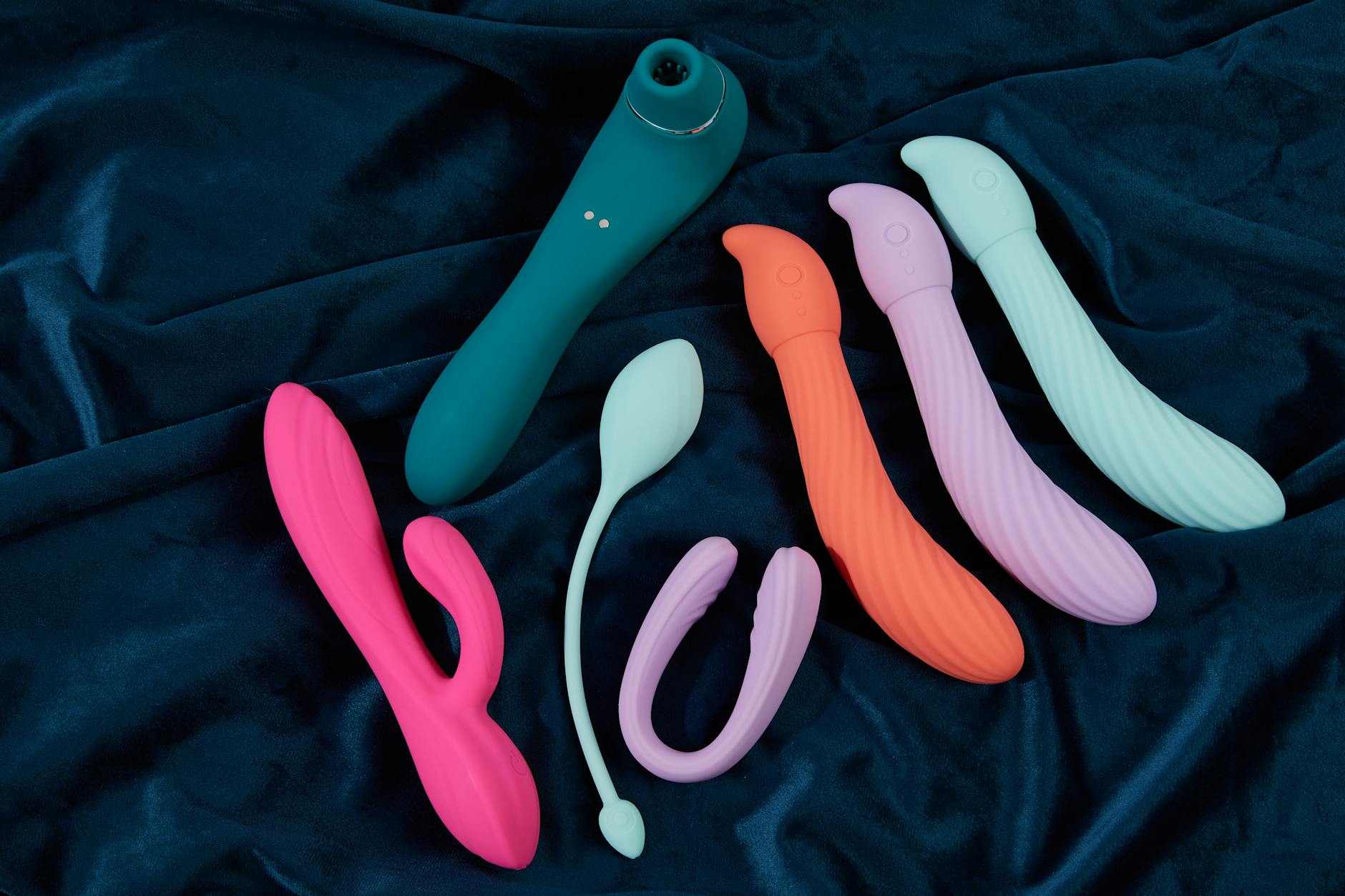
Let's be real about starting something new at this stage
If you're over 40 and thinking about using a vibrator for the first time, or you're returning to pleasure after a long pause, you're probably wondering what's changed. Your body has. Your confidence might be different too. And honestly, that's not a deficit. It's actually an advantage because you know what you don't want to waste time on anymore.
The thing about lemon clitoral vibrators is that they're designed with bodies like yours in mind. Not in a patronizing way, but in a way that understands tissue sensitivity, pacing preferences, and the fact that pleasure doesn't have to feel like a sprint.
Why a lemon vibrator design matters more after 40
Most traditional vibrators are designed around one assumption: faster equals better. Lemon vibrators, by contrast, use air-suction technology that stimulates nerves without aggressive friction. This matters more as we age because vaginal tissue becomes thinner and more sensitive to direct mechanical pressure. It's not that you've lost sensation. You've actually got more nerve density in a smaller area, which can make rough stimulation uncomfortable and subtle stimulation absolutely electric.
The rounded, bulbous design of a lemon vibrator also distributes pressure more evenly than pointed or tapered toys. This is especially relevant if you've noticed that direct clitoral contact feels intense in a less-pleasant way than it used to, or if you prefer gentler stimulation overall.
Unlike traditional designs that force you into one position or require a certain body type to feel the sensation, lemon clitoral vibrators adapt to you. The way it sits in your hand, the angle of approach, the rhythm you set. You're in complete control, which is the whole point.
Before you start: the setup conversation
If you're partnered, talk about this beforehand. Not as a referendum on your sex life or a problem you're solving, but as a practical thing. "I want to explore this on my own first" is a complete sentence. So is "I'd like you here." The conversation matters more than the toy.
Set aside actual time. Not "whenever we happen to have a moment," but a block where you're not thinking about dinner or work emails. Forty-five minutes to an hour. Most of that will be warm-up and exploration, not active use. Your nervous system needs permission to relax into this, and that takes space.
Make your environment work for you. Temperature, lighting, privacy, comfort on whatever surface you're on. These sound obvious but they matter wildly more after 40 because the stakes of distraction are higher. You're more likely to fall into a problem-solving mindset, and your body will feel that tension.
Step one: the warm-up that actually works
Longer than you think you need. If your usual warm-up is "five minutes of kissing," move that to fifteen. Arousal takes longer to build now, and that's not a flaw. It's just the rhythm your body runs on. Your clitoris needs blood flow to swell and become more accessible. That doesn't happen on a timer.
Touch yourself without the vibrator. Explore your vulva like you're relearning it, which you kind of are. Notice what feels good. Some people find that direct clitoral touch feels better when the clitoris is partially covered by the clitoral hood. Others prefer more exposure. You get to figure this out without a device in the way.
This is not wasted time. This is the foundation.
Step two: meet the lemon vibrator (not turned on yet)
Hold it. Get used to the weight and the shape in your hand. Lemon vibrators are intuitive, but intuitive is different from familiar. Run it over your inner thighs, your labia, your lower abdomen. Notice the texture. Most are silicone, which warms slightly against your skin.
If you're using it with a partner, let them hold it. Let them do the exploration. This is about consent and comfort with the object before there's any pressure or stimulation involved.
Step three: starting low
Turn it on at the lowest setting. You probably won't feel much at first, and that's intentional. The sensation builds. The rhythm of air suction is different from vibration, and your nervous system needs a second to register what's happening.
Place the opening gently against your clitoris. Don't push. The design works through gentle contact, not pressure. If you're used to traditional vibrators, this might feel weird at first because you're not feeling a buzz. You're feeling a subtle rhythmic pull, kind of like the sensation of a small kiss.
Stay at level one for at least five to ten minutes. Let your body adjust. There's no rushing this.
Step four: moving through the settings
Most lemon vibrators have three to four intensity levels. The jump between them is noticeable. Move up only when you're ready, and you might find that you never go past level two. That's perfectly normal. The goal is not to reach the highest setting. The goal is pleasure, which looks completely different for every person.
Some people find that mixing intensity levels creates better sensation than staying on one. Go up for ten seconds, back down for twenty. Experiment. This is your own research project.
The mental piece nobody talks about
Your brain might be louder than your body right now. You might be thinking about whether you're doing it right, or whether this is ridiculous, or whether you're taking too long. This is completely normal and completely unhelpful. Your job is to notice that thought and let it pass without engaging.
One thing that helps: focus on sensation rather than outcome. Not "am I going to have an orgasm" but "what does this feel like right now." That shift in attention quiets the narration in your head and lets your body actually feel.
Why orgasm isn't the finish line
Over 40, orgasms can feel different. Sometimes more intense. Sometimes more subtle. Sometimes they build and release differently than you remember. Sometimes exploration doesn't lead to orgasm at all, and that's valuable data about what your body likes, not a failure.
If orgasm happens, great. If it doesn't, the sensation itself is the point. Pleasure without climax is still pleasure. The fact that you've spent time with your own body, learned something about it, and given yourself permission to feel good. That's the win.
Cleanup and integration
Lemon vibrators are silicone, so warm water and a dab of soap is all they need. Dry completely before storing. Keep it somewhere you can easily access it again because the research doesn't end after one session.
After you're done, take a minute to notice how you feel. Relaxed? Energized? Curious? All of those are real outcomes. Your body might surprise you with what it's actually capable of when you give it attention and low-pressure space.
FAQ: What people actually ask about lemon vibrators over 40
Is it normal if it doesn't feel like much the first time?
Completely normal. Your clitoris has about 8,000 nerve endings, and they need to wake up. If you've been without stimulation for a while, or if this is your first time exploring this way, it takes a few sessions before your nervous system recognizes the sensation as pleasure rather than just "something is happening." Come back to it a few times before you decide whether it works for you.
What if my partner wants to use it on me and I'm embarrassed?
That embarrassment is worth naming because it's usually not about the toy. It's about being watched, being vulnerable, or feeling like you need to perform pleasure. Talk about that specifically. "I want to try this, but I need to start alone" is a reasonable boundary. Or "I want you here, but I need you to just watch without touching me for the first bit." Your partner wanting to be part of this is sweet. Your comfort level is the only thing that matters.
Will using a vibrator make partnered sex feel weird?
Not typically. If anything, the opposite. Knowing your own body better usually improves partnered sex because you can actually tell someone what works instead of hoping they guess. And lemon clitoral vibrators are compact and quiet enough that some people incorporate them into partnered sex if they want. You're expanding your toolkit, not replacing anything.
How often should I use it?
As often as feels good. Once a week, three times a week, daily. Your pleasure doesn't have a suggested serving size. Some weeks you'll use it constantly. Other weeks you won't think about it. Both are fine. It's not a habit you have to build. It's a tool you use when you want to.
What if I still don't feel anything after a few tries?
Then this particular device might not be your thing, and that's okay. Bodies are specific. Some people respond beautifully to lemon clitoral vibrators. Others prefer traditional vibration, or they don't use toys at all. The goal is to figure out what works for your body, not to force something that doesn't. If you're curious about why, a conversation with a sex-positive healthcare provider can help rule out anything medical like medication side effects or hormonal shifts that are dampening sensation.
Is there a learning curve with the lemon vibrator design specifically?
Slight one, mostly because it's different from other vibrators. The air-suction sensation takes one or two sessions to feel intuitive. After that, it usually clicks. If you're used to traditional vibrators, you might initially think it's not working because the sensation is gentler. That's the design working as intended. Give it three to five uses before you decide.
Can I use it if I'm on hormonal birth control or HRT?
Yes. Pleasure and your medication are separate systems. Some people on HRT actually report increased sensation because hormone levels stabilize. Others don't notice a change. Your vibrator works regardless of what you're taking.
The real thing about starting now
There's something specific about exploring pleasure at your age that younger people don't have access to. You've stopped performing for an imaginary audience. You know what you actually want instead of what you think you should want. You're less embarrassed by your body because you've spent enough time in it to know it's just a body.
A lemon vibrator isn't about fixing anything or proving that you still have it. It's about saying that your pleasure matters enough to allocate time and attention to it, right now, in this body you're in.
That's the whole point. Everything else is logistics.
If you want to dig deeper into how pleasure changes over time, or how to navigate these conversations with a partner, reach out. That's what I'm here for.