Let's talk about what hormones actually do to pleasure
Here's the thing most people don't realize: your sensitivity to touch, your ability to orgasm, and the intensity of your pleasure shifts dramatically across your menstrual cycle. Not every day is the same. Not every week either. But almost nobody tells you how to work with this instead of fighting it.
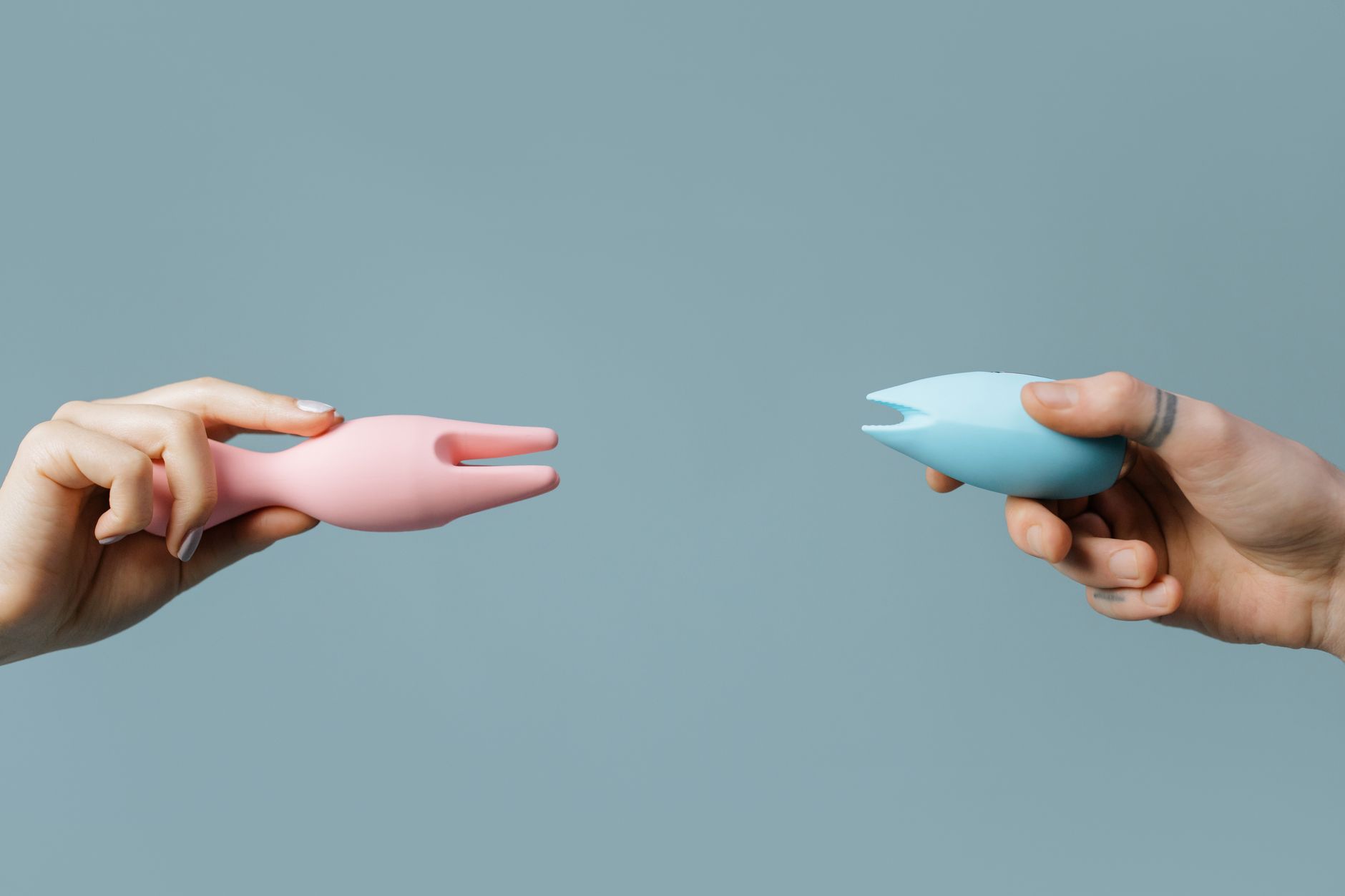
Your estrogen rises and falls. Your testosterone does the same. These aren't abstract hormones floating around in the void. They directly change how your clitoris responds to stimulation, how quickly arousal builds, and what kind of sensation actually feels good. The Lem vibrator and other lemon clitoral vibrators are incredibly precise tools. But precision only works if you're matching the right settings to your body's actual state.
This guide is about syncing your lemon vibrator use to your cycle. Not for fertility tracking (though that matters too). For pleasure.
The follicular phase: When intensity feels amazing
This runs from day one of your period through ovulation, roughly days 1 to 14. During this window, estrogen is climbing. Your clitoris becomes more sensitive to touch. The tissues swell slightly with increased blood flow. Your brain is getting more responsive to sexual cues.
Here's what this means for your lemon adult toy experience: you can handle higher intensity. Patterns 5 through 8 on the Lem feel incredible right now. Your arousal builds faster. You need less warm-up time than other phases. Many people report that their most powerful orgasms of the cycle happen in the second half of this phase, right before ovulation hits.
How to adjust: Start higher. Try patterns 6 or 7 as your baseline. You won't feel numbed out. Longer sessions feel better. Your body wants sustained intensity. The suction feeling of the Lem, which can sometimes feel overwhelming, becomes exactly what you're craving.
The ovulation window: Peak sensitivity and speed
This is roughly a 24 to 48 hour window around mid-cycle, typically days 13 to 15. Testosterone spikes. Estrogen is still elevated. Your clitoris is at maximum engorgement. You might literally feel more aroused without any external stimulus.
During this phase, many people can orgasm faster than any other time. The Lem's pattern work particularly well because you don't need the extended build time. Your body is already halfway there. Some people skip the warm-up entirely and go straight to a mid-range pattern. The orgasm, when it comes, is often the most intense of your cycle.
How to adjust: Trust that you know what you want. Don't overthink the settings. Patterns 4 through 7 work equally well. What matters more is that you use the Lem for a shorter duration. Get in, feel it, let it happen. Overthinking kills the momentum. Your body is already doing most of the work.
The luteal phase: When slower is smarter
This is the two weeks after ovulation until your period starts. Progesterone rises. Estrogen drops. Your clitoris becomes less engorged. Sensitivity decreases. Your arousal takes longer to build. This is not a problem. It's just a different setting.
Many people experience this phase as less pleasurable, but that's usually because they're still using the same technique and intensity as they did during the follicular phase. Mismatch equals frustration. Instead, meet your body where it actually is.
How to adjust: Start at patterns 1 through 3. Give yourself 20 to 30 minutes for warm-up. Yes, that's longer. Yes, it's worth it. The orgasm in this phase has a different quality. It's often deeper, more full-body, less focused on pure intensity. Some people actually prefer it. Lubrication becomes more important now. Use water-based lube even if you normally don't need it. Your tissues benefit from the extra support.
Your partner, if you have one, should know this too. The luteal phase isn't the phase for quickies. It's the phase for patience and presence.
The menstrual phase: When pleasure serves a different purpose
During your actual period, some people feel zero interest in pleasure. Others find that orgasms help with cramping and release tension. Both are completely normal.
If you do want to use your lemon vibrator during menstruation, understand that sensitivity drops at the beginning of your period and gradually returns as bleeding lightens. Your pelvic floor might feel heavier. The suction sensation of the Lem can feel either incredibly soothing or mildly uncomfortable depending on your body.
How to adjust: Keep intensity low. Patterns 1 through 3. Focus on the sensation as pain relief, not necessarily on reaching orgasm. If it feels good, keep going. If it doesn't, stop. Your body is shedding. It's not the time to demand peak performance from your pleasure response. That's biology, not failure.
Why water-based lube becomes a non-negotiable in the luteal phase
Progesterone increases cervical mucus but decreases clitoral lubrication. That sounds backward but it's true. Your vagina feels wetter while your clitoris feels drier. The clitoris is what the Lem is touching. Use lube. Water-based only if you're using silicone toys (which the Lem is). Silicone lube can degrade silicone toys over time.
This isn't shame. This isn't a sign something is wrong with your body. It's just the luteal phase being the luteal phase. The adjustment takes 30 seconds and transforms the experience from frustrating to exactly right.
Tracking your own patterns: The only chart that matters
Everybody's cycle is different. The 28-day textbook cycle? Half of people don't have one. Some cycles are 21 days. Some are 35. Hormonal birth control changes everything. PCOS changes everything. Perimenopause changes everything.
Instead of memorizing when ovulation "should" happen, actually track your own pleasure response. Spend a few cycles paying attention to when high-intensity settings feel good, when you need lube, when you want a partner involved versus solo, how long arousal takes. Write it down. Three cycles of data and you'll have a better map of your body than any generalized guide.
This information is yours alone. It's practical. It's useful. And it makes using your lemon clitoral vibrator not a guessing game but a conversation with your own body.
The relationship piece: Syncing pleasure with your partner
If you have a partner, they need to know about your cycle phases. Not because they control your pleasure (they don't), but because they can adjust their approach to match what your body actually wants. If they know the follicular phase is when you want intensity and longer sessions, they can plan differently. If they know the luteal phase requires patience and more foreplay, they can lean into that.
You might also discover that you and your partner sync differently. Some partners want more sex during your follicular phase because your arousal is faster. Others prefer the quality of luteal phase orgasms. Neither is right. Both are information. Use it.
What to avoid: The mistakes that tank pleasure
Don't ignore the progesterone dip. Just because the follicular phase felt amazing with patterns 7 and 8 doesn't mean patterns 7 and 8 feel good all month. Expecting your body to respond the same way across your entire cycle is expecting biology to break its own rules.
Don't skip lube in the luteal phase thinking you're being weak or broken. You're not. You're being smart. Lubrication is a tool, not a crutch.
Don't have a partner push intensity when your body is signaling it wants slow. The luteal phase is not a time to override what your body is telling you. It's a time to listen harder.
Don't assume that tracking your pleasure is vain or obsessive. It's self-knowledge. Every athlete knows their body's patterns. So should you.
FAQ
Why does my lemon clitoral vibrator feel stronger during ovulation?
Your clitoris literally changes size across your cycle. During ovulation, increased blood flow causes the tissue to swell. A larger, more engorged clitoris means more nerve endings in the area of contact with the Lem's suction head. Same vibrator setting, amplified sensation. This is not in your head. This is physiology.
Can I use my lem vibrator during my period?
Yes, if you want to. Some people find that orgasms during menstruation actually reduce cramping due to the muscle contractions that happen during climax. Others have zero interest and that's fine too. If you do use it, keep intensity low and listen to what feels good. Your period is not a time to push past discomfort for the sake of performance.
Does hormonal birth control change how my lemon vibrator feels?
Absolutely. Hormonal birth control flattens your cycle. It removes the peaks and valleys that make follicular and luteal phases distinct. You might feel consistently medium sensitivity instead of dramatic swings. The Lem probably works best at medium-range patterns (4 or 5) throughout your cycle instead of shifting between low and high. This varies by birth control type and by person. Pay attention to what your body tells you, not what the textbook says should happen.
I'm on antidepressants and I barely feel anything. Is cycle syncing still relevant?
Yes, but the effect is dampened. The underlying hormonal shifts are still happening. Your sensitivity still changes across your cycle. But if your baseline is already numbed, you might not notice the difference between phases as dramatically as someone not on medication. Using lemon vibrators for better sensation when you're numb from stress covers this specific situation in detail.
What if my cycle is irregular or I have PCOS and I don't ovulate regularly?
Cycle syncing becomes less predictable, not impossible. People with PCOS often have longer follicular phases, lighter ovulation signals, or no ovulation in some cycles. Instead of syncing to a theoretical calendar, sync to your body's actual signals: increased libido, more lubrication, higher energy, or changes in cervical mucus. These markers track closer to your actual hormones than the day of your cycle. How lemon vibrators feel different when you have PCOS goes deeper into this scenario.
Is it normal that my partner and I want different things at different parts of my cycle?
Completely normal. Many couples find that desire sync naturally during the follicular phase. During the luteal phase, mismatched desire becomes apparent. This isn't a sign your relationship is broken. It's a sign you need to have an actual conversation about how to handle the difference. Sometimes it's solo pleasure with the Lem while your partner does something else. Sometimes it's extended foreplay instead of penetration. Sometimes it's a break week. There's no single answer. The conversation is the answer.
The bigger picture: Your body isn't broken, it's cyclical
We're taught to think of our bodies as one static machine that should perform the same way every single day. That's not how hormonal bodies work. You're not a robot. You're a human with a cycle that creates distinct phases with different capabilities and desires.
Using your lemon vibrator smartly across your cycle isn't about optimization or performance. It's about honoring that your body changes, has different needs at different times, and deserves an approach that matches reality instead of fighting it.
Start paying attention. Adjust your settings. Use lube when you need it. Trust what your body is telling you. That's the whole practice.