
How chronic stress actually kills sensation
Years of stress don't just make you exhausted. They rewire your nervous system into a permanent state of protection. Your body stops sending pleasure signals the way it used to because, at a neurological level, it's waiting for the next threat. Pleasure is a luxury item your brain doesn't allocate resources to when it's running on emergency mode.
This isn't a failing on your part. This is what happens when your sympathetic nervous system (the gas pedal) stays pressed for too long. Your parasympathetic nervous system (the brake) forgets how to engage.
Why sensation numbing happens at a physical level
Here's what's actually going on in your body. When you're chronically stressed, your cortisol and adrenaline stay elevated. This narrows blood flow, increases inflammation, and literally desensitizes nerve endings. Your clitoral tissue, which relies on blood flow and nerve responsiveness, becomes less reactive. You can touch the same spot that used to feel electric and feel almost nothing.
Add to that the fact that stress triggers your pelvic floor to tense up as a protective reflex. Tight muscles mean less sensation. Tight muscles also mean pleasure feels harder to access, which creates a feedback loop. You try, nothing happens, and your nervous system locks down even tighter.
The good news: this isn't permanent. Your nervous system is designed to rewire itself. It just needs the right stimulus and the right conditions.
Why lemon vibrators work differently for numb sensation
A lemon clitoral vibrator operates on air-pulse suction rather than traditional vibration. This matters enormously when you're working with desensitized tissue. Here's why.
Traditional vibrators stimulate through friction and amplitude. If your nerves are already quiet, they can feel overwhelming or numb at the same time. You're either too much or nowhere near enough. Suction-based stimulation works on a different principle. It creates a gentle pulling sensation that draws blood flow into the tissue and wakes up nerve endings without harsh friction.
Think of it like this. A vibrator is like tapping on a door. Suction is like knocking in a rhythm that your nervous system recognizes as safe. Your body doesn't panic. It gradually opens.
Lemon vibrators are designed with intensity levels that allow you to start incredibly subtle. Pattern 1 or 2 on a lem vibrator is genuinely gentle. You're not forcing sensation. You're inviting it back.
Starting over with your lemon vibrator: the nervous system approach
If you've been numb for years, jumping to intensity level 5 will just confirm that you "can't feel anything." That's not true. Your nervous system just needs slower re-entry.
Here's how I recommend approaching it:
Week 1-2: Just hold it. Seriously. Don't even turn it on. Let your nervous system get used to the weight and texture. This sounds absurd until you remember that your parasympathetic nervous system operates through safety signals. Familiarity is one of them.
Week 2-3: Turn it on at pattern 1. Just the lowest setting. Spend time with it off your most sensitive areas. Try your inner thighs, your labia, areas around your clitoris but not directly. Notice what you feel. Tingling? Nothing? Both are fine. You're gathering data.
Week 3-4: Direct gentle contact. Now move to your clitoris directly, but stay at pattern 1. Spend 10-15 minutes here. Don't try to orgasm. That's not the goal. The goal is sensation alone.
Week 4+: Explore patterns and timing. Once pattern 1 starts to feel like something, you can experiment with pattern 2 or 3. You can also start to think about pacing. Fast bursts versus long holds. Different angles.
This timeline isn't rigid. Some people need more time at each stage. Honor your nervous system's pace.
Rebuilding parasympathetic activation alongside pleasure
All of this only works if your nervous system is actually in a state where it can feel. That means stress reduction has to be part of the equation.
I tell my clients this: you cannot pleasure your way out of chronic stress. You have to also address the stress itself. This means sleep, movement, and time away from your usual triggers. It means being honest about what's eating your nervous system and whether those things are worth what they're costing.
The lemon vibrator is a tool for waking up sensation once you've created space for it. It's not a workaround for unaddressed chronic stress.
That said, pleasure itself is a parasympathetic activator. When you do manage to access sensation, even small amounts, your body learns that it's safe to let go of protection mode. This creates a virtuous cycle. Less stress allows more sensation. More sensation calms the nervous system further.
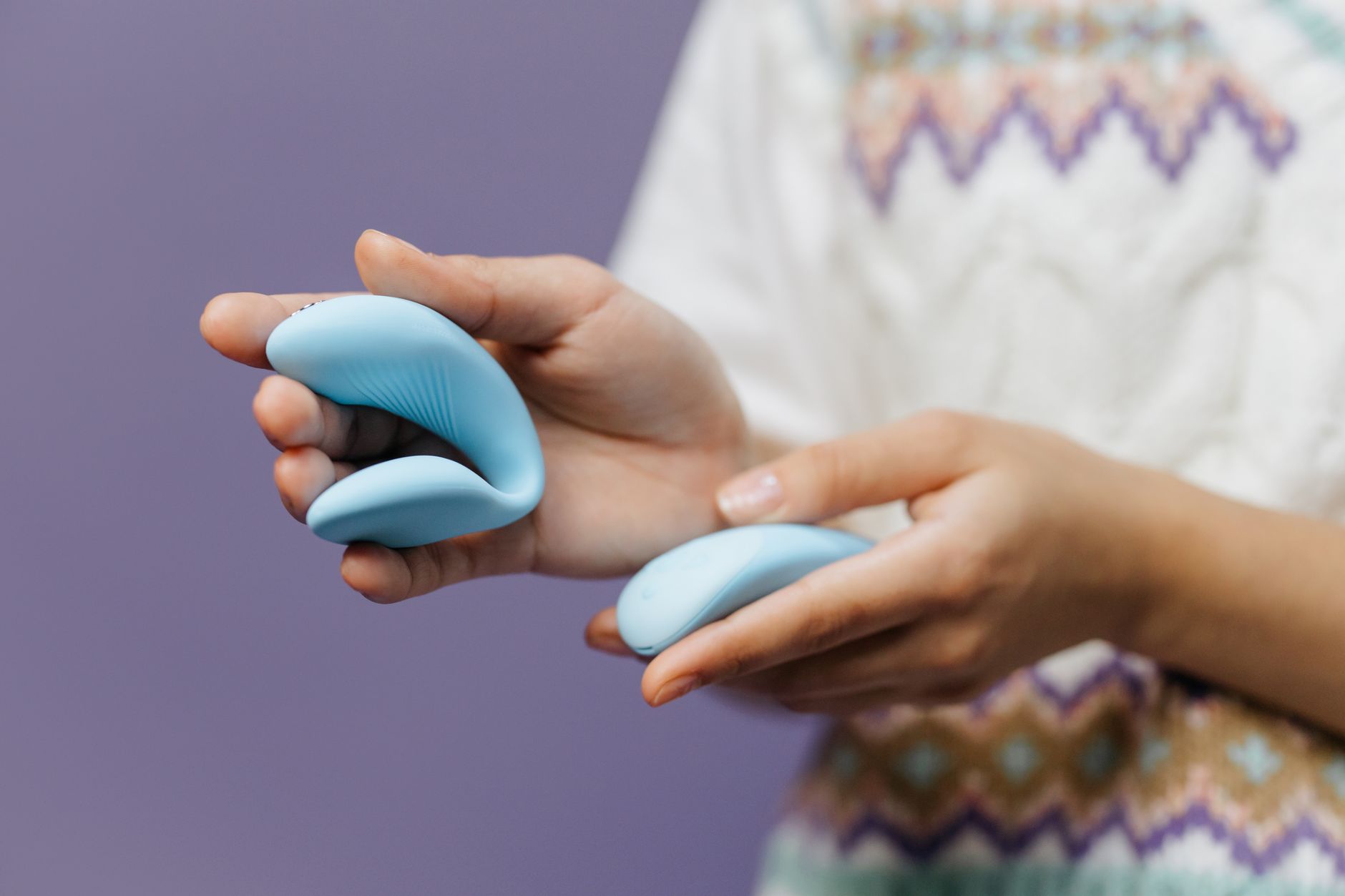
Photo by cottonbro studio on Pexels
The role of breathwork and grounding while using your lemon vibrator
Once you're past the initial stages of re-engagement, adding intentional breathing makes a measurable difference. Your breath is the fastest way to signal safety to your vagus nerve, which controls parasympathetic activation.
When you're using your lemon clitoral vibrator, try this: inhale for 4 counts, hold for 2, exhale for 6. The long exhale is key. It tells your nervous system to relax. Do this for the first few minutes of your session before moving to pleasure.
Some people also find it helpful to ground themselves in their body before starting. Notice five things you can see. Four things you can physically feel (the bed beneath you, the fabric of your clothes, etc.). Three things you can hear. Two things you can smell. One thing you can taste. This activates your prefrontal cortex and brings you out of autopilot.
These aren't luxuries. They're part of the sensation recovery process.
When numbness is related to medications
If you're on antidepressants or anti-anxiety medications, some of that numbness might not be stress itself but the medications managing it. This is a real conversation to have with your prescriber. Sometimes adjusting timing, dose, or medication can help restore sensation without compromising your mental health.
Otherwise, the lemon vibrator approach is the same. Many of my clients who are medicated and using these tools report that the gentle suction-based stimulation works better than traditional vibration precisely because it doesn't require the same level of baseline sensitivity to feel something.
Creating the right context for sensation recovery
You can't rebuild sensation in chaos. You need time when you're not watching the clock or listening for interruptions. You need privacy and a physical space that feels safe.
If you're in a relationship, your partner doesn't need to be absent entirely, but they do need to be separate from this process initially. This is about you and your nervous system reconnecting. Make that clear. Give yourself permission to explore alone.
I also recommend setting a realistic expectation with yourself. You might not orgasm for months. You might not orgasm at all from a lemon vibrator, and that's fine. The goal is sensation. Pleasure. Connection to your own body. If orgasm shows up, great. If it doesn't, you've still won.
FAQ: Rebuilding sensation after stress
How long does it take to feel sensation again after years of numbness?
It varies, but most people report noticeable changes within 4-8 weeks of consistent, gentle exploration. Some feel something shift in 2 weeks. Others need 3-4 months. The key is consistency and patience. Your nervous system didn't numb overnight, and it won't reawaken overnight either. The fact that you're trying is what matters.
Can I use a lemon vibrator if I'm completely numb right now?
Yes. In fact, lemon clitoral vibrators are often easier for numb sensation than traditional vibrators because the suction mechanism works at a different level. You might not feel pleasure initially, but you're still creating the neurological conditions for your nervous system to wake up. Think of it as rehabilitation, not entertainment.
Should I use my lemon vibrator every day or space it out?
Space it out initially. Two to three times per week gives your nervous system time to process and consolidate changes. Once sensation starts returning, you can increase frequency if you want to. But daily use when you're starting from numbness can actually feel overwhelming and backfire.
Is the sensation I'm feeling supposed to hurt or feel uncomfortable?
No. Discomfort during sensation recovery is usually a sign that you've moved too fast or too intense. Dial it back to a previous level and stay there longer. You're rewiring your nervous system, not pushing through pain. If something genuinely hurts, stop and consider whether stress-related pelvic floor tension needs attention separately.
What if I'm using a lemon vibrator and feeling nothing at all, even after weeks?
First, check in with stress levels. If your life is still in crisis mode, your nervous system won't cooperate. Second, consider whether you need to slow down even further. Pattern 1 with indirect contact for another few weeks. Third, talk to your doctor about whether numbness might be related to hormones, medications, or other physical factors beyond stress. Sometimes multiple things are happening at once.
Can lemon vibrators help if my numbness is from depression or anxiety medication?
Yes, often. The gentle suction approach works well with medication-related numbness. That said, talk to your prescriber before making changes. If numbness is a side effect bothering you, there might be adjustments that work better. In the meantime, a lemon vibrator can help you maintain connection to pleasure even if sensation is muted.
The bigger picture: pleasure as nervous system recovery
Let's be clear about what's happening here. You're not just trying to orgasm again. You're retraining your entire nervous system to recognize that safety, rest, and pleasure are accessible to you. That's the opposite of what years of stress taught it.
Using a lemon vibrator in this context isn't indulgent. It's therapeutic work. You're literally rewiring your capacity for joy, relaxation, and connection. That matters. Your body deserves to remember what sensation feels like. Your nervous system deserves to know that not everything is a threat.
If you need support navigating this process or want to talk through what's driving the underlying stress, let's talk. Rebuilding sensation often works better when you're also addressing the root causes.