Let's be real about the awkward part
You've used toys before. Your new partner hasn't. And now you're stuck in that loop where you want to bring them into the experience but the conversation in your head sounds like a clinical TED talk or a rejection (which it absolutely isn't). Here's the thing: most partners who haven't used toys are curious, not opposed. They're just waiting for permission to care about your pleasure.
Introducing a lemon vibrator to someone new doesn't require a big reveal or a serious talk. It requires something simpler: a signal that toys are just part of how you experience pleasure, the same way you'd mention a favorite position or what kind of touch you like.
Why the hesitation exists (and why it's not what you think)
Most people carry one of two fears about introducing toys to a partner. The first is "they'll think I need it because they're not enough." The second is "they'll think I'm weird." Both are understandable. Neither is usually true.
What your new partner is actually thinking (or will be once you bring it up) is simpler: "Oh, that's how she experiences pleasure. Got it. I want to understand that." Curiosity, not insecurity. That's the starting point.
The hesitation on their end, if it appears, usually isn't about judgment. It's about not knowing the logistics. Will it hurt? Is it loud? Do I use it on you or do you? What if I'm bad at it? Those are answerable questions, not character flaws.
The setup: when and how to mention it
Don't wait for a serious conversation. Don't plan a speech. The best time to introduce a clitoral vibrator to someone new is during foreplay, when you're already touching each other and the momentum is going. It's the least loaded place to bring it up because you're already in pleasure mode.
You might say something like: "I really love using this. Want to try it together?" Or: "There's something that makes me come really well. Can I show you?" Keep it specific to you, not to any deficiency in them. You're not saying "I need this to feel pleasure." You're saying "This is something I know works for my body."
If the conversation comes up outside the bedroom (which is fine too), keep the same tone. Casual, informative, zero shame. "I've been using lemon vibrators for a while and I really like them. If we ever wanted to use one together, I'd love to show you how." Then move on. You've planted the seed. The fact that you mentioned it without embarrassment signals to them that it's normal.
What to actually show them (step by step)
Once you've gotten the okay, here's how to make the first experience feel easy rather than performance-y.
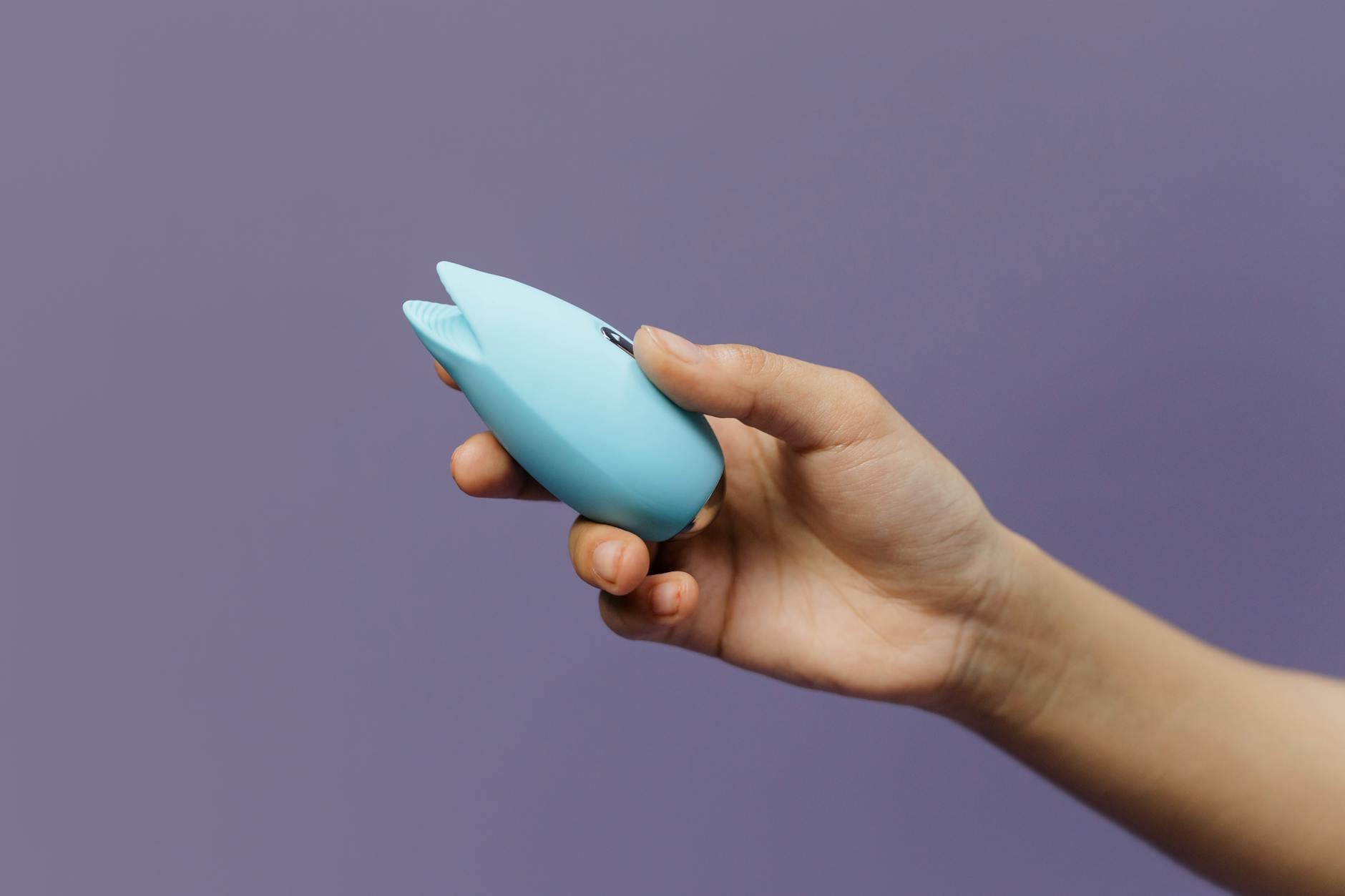
Start with the basics. "This is a lemon vibrator, like a Lem. It uses suction, not vibration." (Or whatever toy you're using.) Explain the difference. Show them where the power button is. Let them hold it, feel the weight, understand what's happening. Demystification kills awkwardness fast.
Then show them how you use it. This is the powerful part. Use it on yourself for a minute or two while they watch. You're not performing for them. You're just showing them what your pleasure looks like with this tool. This does something huge: it tells them that you're comfortable with your own body and your own sensation. It's not scary. It's matter-of-fact.
After that, invite them in. "Want to try?" Some partners want to use it on you. Some want to watch you use it while they touch you elsewhere. Some want to use it on themselves to see what it feels like. All of those are fine. Let them lead what comes next.
The first time using it together (realistic expectations)
Two things will probably be true. First, it might take you longer to orgasm because there's new energy in the room and your brain is split between pleasure and awareness of them. That's normal. Second, your partner might be slightly tentative or overly focused, trying to "do it right." That's also normal.
Make it clear ahead of time: there's no performance happening here. You're not trying to have the best orgasm of your life. You're trying to show them what your body responds to. Lower expectations mean better sex, genuinely.
If you come, great. If you don't, also fine. The point is that your partner is now learning what you like. That's relationship data that will serve you both for months to come.
What to do if they're reluctant
Sometimes someone needs more time. "I'm not ready for that" is real and valid. Don't push. But do separate the two conversations.
One conversation is about toys. The other is about your pleasure and their interest in it. You can say something like: "I'm not asking you to use it on me today. I'm just letting you know that this is part of how I experience pleasure, and at some point, I'd love to share that with you." Then give them space.
Often reluctance softens with time. They see you using it casually. They get curious. They ask questions. That's the slower path, but it works.
If the reluctance doesn't soften and it's a core part of what you want in your sexual relationship, that's a compatibility conversation. But give it room first.
The conversation about sensation and pleasure
While you're introducing the toy, you're actually introducing your partner to a deeper conversation: what makes you come, what you like, what you've learned about your own body. That's the real intimacy here.
You might tell them: "When we use this, I can feel more sensation because it works differently than fingers or anything else." Or: "I like that I can control it myself and show you what works." These details aren't clinical. They're love notes to your own body, delivered in front of someone you're building intimacy with.
That's when toys stop being weird or threatening. They become a language for talking about what actually turns you on.
Making it a regular thing (without it feeling weird)
Once your new partner has used a lemon vibrator with you once or twice, the next part is casual integration. You use it sometimes. You don't use it sometimes. Neither of you makes a big deal out of it. It's just part of your toolkit.
Some couples use toys every time they have sex. Some use them once a month. Some use them when they're short on time or when one person is tired. There's no rulebook here. Whatever rhythm feels natural to you both is the right rhythm.
What matters is that you've opened a door where sensation, communication, and pleasure are all on the table. A lem vibrator is the excuse. The actual win is that you've made it safe for your partner to ask what you want and for you to tell them.
When a clitoral vibrator actually deepens the relationship
Here's something that gets left out of these conversations: toys can make partners closer. Using one together requires communication, vulnerability, and attention. You're asking him or her to be present with you while you experience pleasure. That's not separate from emotional intimacy. It's a form of it.
Instead of seeing a lemon vibrator as a workaround for something missing in the relationship, you can see it as evidence of a relationship that's open enough to evolve. If your new partner can be curious about what you want physically, they're usually the kind of person who can be curious about what you want emotionally too.
The pressure you don't need to feel
You don't need to turn this into a big reveal. You don't need to buy a special toy or set up candles or write an introduction speech. You don't need permission from your partner to own toys or use them alone. What you do need is a partner who's willing to be interested in your pleasure. If they are, introducing a lemon vibrator is just the beginning of that conversation, not the whole conversation itself.
People Also Ask
Is it normal to want to use toys in a new relationship?
Completely normal. People who are comfortable with their own sexuality tend to be more open about it earlier. Using toys doesn't mean anything is wrong with the relationship. It means you have a body that knows what it likes.
What if my partner thinks I'm asking him or her to use a toy because I'm not satisfied?
This is worth saying out loud: "I'm bringing this up because I want you to be part of my pleasure, not because you're missing something." Most of the time, that conversation clears up the worry immediately. Your partner probably just needs one clear sentence to feel secure.
Can we use a lemon vibrator if my partner is much less experienced sexually?
Yes, and it's actually a good teaching tool. Clitoral vibrators like the Lem are straightforward. They show your partner exactly what kind of stimulation creates sensation for you, which takes a lot of guesswork out of sex. Less experience doesn't mean less willingness to learn.
Is it weird to use a toy the first time we have sex?
Yes, a little. Not because toys are weird, but because first-time sex has its own awkwardness. You're both getting to know each other's bodies. Add a new tool into that and it's one more thing to figure out. Wait a few times, let the basic motion feel natural, and then introduce the toy. Your partner will be more confident.
What if my partner wants to use a toy on themselves?
That's great. That means they're exploring what works for their own body. You can use it together, or they can show you what they like, or they can use it alone sometimes. However it happens, you're both learning what you each need. That's the whole point.
How do I bring up toys if I've been with my partner for a while and never mentioned it?
You can still use the casual approach. "I've been thinking about trying something new in bed. Would you be open to using a clitoral vibrator together?" If you've been together longer, you probably have a baseline of communication that makes this easier, not harder. You just have to start somewhere.
The bottom line
Introducing a lemon vibrator to a new partner isn't a test. It's an opportunity. It's you saying: "Here's what my pleasure looks like. I want to share that with you." Most people respond to that with curiosity, not rejection. And if they do respond with openness, you've just learned something important about them too.
Starting a new relationship with honest conversation about what you like sexually isn't oversharing. It's how you build a foundation where both people feel seen. And that's what actually makes sex better over time, with or without toys.