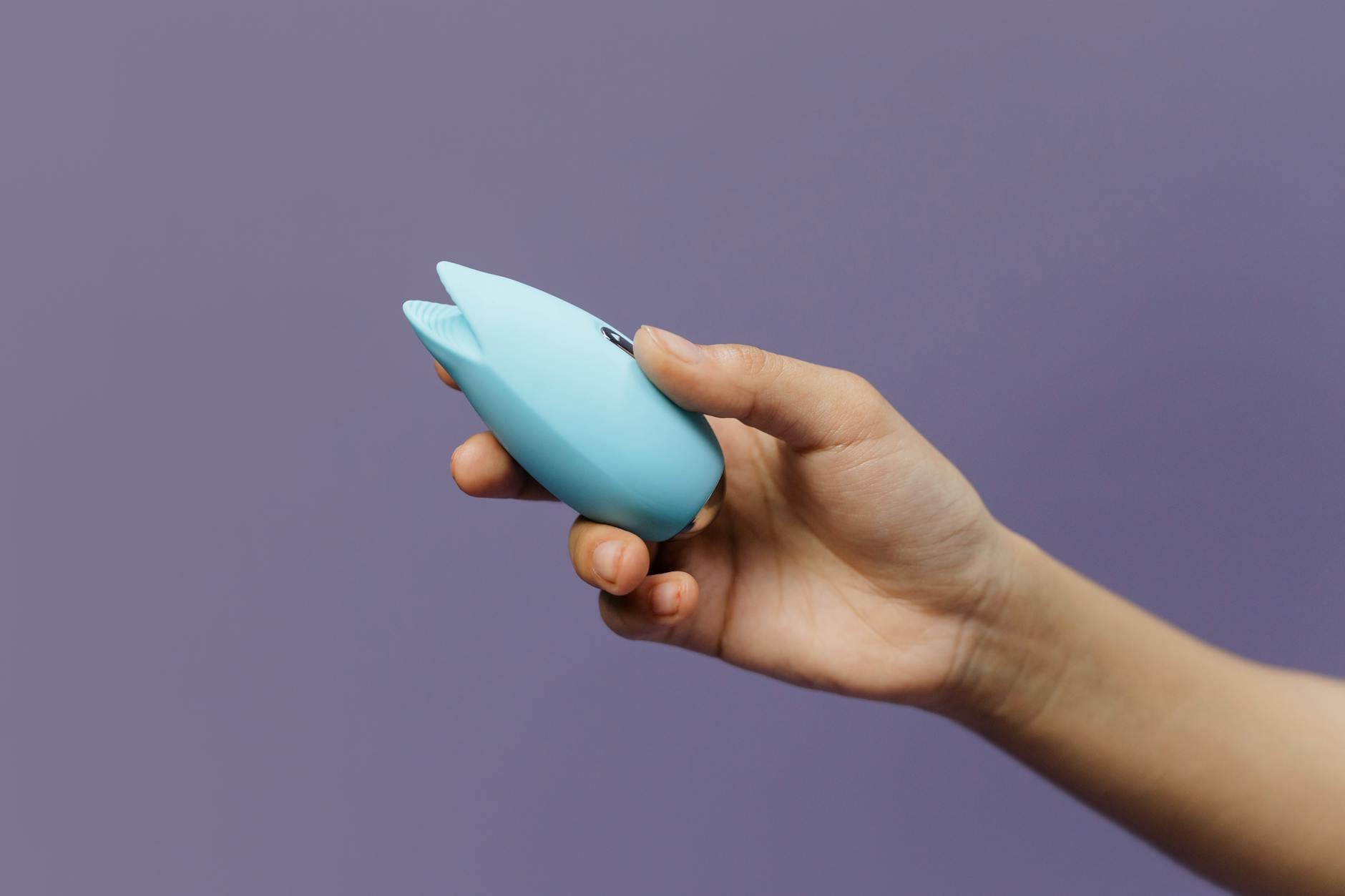
Why the sensation is nothing like a conventional vibrator
Here's the thing. If you've only ever used a traditional vibrator, a lemon clitoral vibrator will feel genuinely foreign the first time you use it. Not bad, not wrong, just completely different. And that difference is not marketing hype. It's neurology.
Conventional vibrators move back and forth. They use friction and oscillation to stimulate nerve endings. Lemon vibrators, designed with air-suction technology, create a gentle sucking sensation. The distinction matters because your clitoris has about 8,000 nerve endings concentrated in a space the size of a fingernail, and different stimulation patterns activate different subsets of those nerves.
How air-suction stimulation actually works
When a lemon clitoral vibrator activates, it doesn't vibrate against tissue. Instead, it creates a gentle rhythmic pulse of suction and release. This stimulates the clitoris through pressure changes, not mechanical friction. Think of it as the difference between shaking something and gently pulling it forward and back.
The mechanism matters for three reasons.
First, there's less direct pressure. For people with sensitive tissue, vulvodynia, or those recovering from vaginal procedures, direct vibration can feel overwhelming or even painful. Air-suction lemon vibrators distribute stimulus across a wider nerve field with gentler pressure, which often feels more approachable.
Second, the rhythm is different. Most conventional vibrators operate at a fixed frequency (typically 40 to 100 Hz). Lemon vibrators pulse rhythmically in a way that mimics human touch more closely. Your nervous system recognizes this rhythm as more similar to a partner's touch, which can trigger deeper arousal and response.
Third, it targets the external clitoris more effectively. The clitoral glans (the visible part) has densely clustered nerve endings that respond better to suction and gentle pressure than to vibration alone. This is why many people report that lemon clitoral vibrators produce more intense, full-body sensations faster than traditional designs.
Who reports the biggest difference
Three groups notice the shift most acutely.
People who've struggled to orgasm with conventional vibrators. If you've spent years feeling like "something works, but barely," or you need intensity so high it numbs your nerve endings, the gentler approach of lemon vibrators can reset your sensitivity. Many clients tell me they didn't realize how much sensation they'd lost to numbing until they tried an air-suction design and felt a full-spectrum response again.
People in perimenopause or postmenopause. Tissue thinning from dropping estrogen makes direct vibration feel harsh. The suction-based approach of lemon sexual toys distributes pressure across tissue in a way that feels supporting rather than assaultive. You get stimulation without the friction-burn sensation that conventional vibrators can trigger.
Partners reconnecting after time apart or after a relationship shift. Because air-suction lemon vibrators feel more like human touch, many couples find them less intimidating to introduce to shared intimacy. They feel less like a replacement and more like an amplifier of what you already do together.
The neuroscience behind faster arousal
Here's what surprises most people: your nervous system can recognize the difference between programmed vibration and rhythmic pulse. Brain imaging studies show that rhythmic stimulation activates different reward pathways than constant-frequency vibration.
When you use a lemon vibrator with its pulse-based rhythm, your brain registers the pattern as similar to manual stimulation. This bypasses some of the "this is artificial" skepticism your nervous system might otherwise engage with. You're not fighting against your own wiring. You're working with it.
This is why many people orgasm faster, and more intensely, with air-suction designs. It's not that they're more powerful. It's that your nervous system accepts the stimulus as legitimate pleasure faster, which means less mental friction and faster buildup to climax.
Photo by SHVETS production on Pexels
The stimulation pattern differences explained clearly
Let's break down what's actually happening physiologically when you use different toy designs.
Conventional vibrators: operate by oscillating back and forth at a constant speed. The clitoris experiences repeated friction and pressure. Sensation builds through repetition and intensity. After extended use, nerve endings can become desensitized (which is why you might need to keep turning up the power). The stimulation pattern is rhythmic but uniform.
Air-suction lemon clitoral vibrators: create a series of gentle suction pulses. The clitoris experiences a pulling sensation followed by release. This mimics the rhythm of manual stimulation more closely. The suction pattern activates different nerve receptor types than vibration alone. Desensitization happens more slowly because the stimulus pattern varies slightly with each pulse.
The key difference is that vibration is constant and localized. Suction is rhythmic and distributed. Your nervous system responds to these patterns differently, which translates to different sensations and often faster arousal.
Why positioning and pressure matter more with lemon toys
Because air-suction lemon vibrators work through pressure change rather than friction, how you position them on your body makes a bigger difference than with traditional vibrators.
With a conventional vibrator, you can press it firmly or lightly and still get roughly the same sensation. With lemon sexual toys, the seal between the toy and your body determines the effectiveness of the suction. A good seal means optimal sensation. A loose seal means the toy won't work well.
This isn't a flaw. It's actually an advantage because it forces you to pay attention to your own body's geometry and preference. You learn what position produces the best sensation for you. You become more conscious of your own pleasure, which deepens both solo and partnered experiences.
Many people also report that because lemon clitoral vibrators require intentional positioning, they feel less like an appliance and more like an intimate tool. You're not just switching it on and letting it do the work. You're actively participating in the experience.
Comparing sensation intensity and endurance
A common question: does air-suction mean less powerful?
Not exactly. Conventional vibrators are powerful in a linear way. They go from zero to 100. Lemon vibrators build sensation in a different curve. They often reach intense, sustained pleasure faster, but without the same harsh peak.
Many people describe orgasms from lemon sexual toys as deeper and more full-bodied than vibrator-induced orgasms. This might be because the suction pattern stimulates more nerve endings across a wider area rather than concentrating intensity in one spot.
For endurance, air-suction toys often win. Because they don't numb nerve endings the way repetitive high-frequency vibration does, you can use them longer before sensitivity drops. People often report that they can have multiple orgasms in succession with lemon toys, whereas with conventional vibrators, after one orgasm, additional stimulation feels less pleasurable.
The adjustment period, honestly
I'd be remiss not to mention that the first time you use a lemon vibrator, the sensation can feel odd. Your body is expecting vibration and gets suction instead. This is not a problem. It's an adjustment.
Give yourself three to five uses to acclimate. Your nervous system needs to learn the new pattern. By use three, most people stop thinking "this is different" and start thinking "this feels amazing." The adjustment is normal and quick.
If you're someone who's been using the same type of vibrator for years, your body has learned to respond to that specific stimulus. Switching to a lemon clitoral vibrator is like learning a new accent. It takes minimal time to fluency, but there is a tiny learning curve.
Frequently asked questions
How does a lemon vibrator compare to a traditional vibrator for beginners?
Beginners often report that lemon clitoral vibrators feel more approachable than conventional toys. The gentle suction-based rhythm mimics human touch more closely, which feels more intuitive. Many people who thought they "didn't like vibrators" find that lemon vibrators unlock sensations they didn't know were possible. If you're new to toys entirely, an air-suction design often creates a more positive first experience than a traditional vibrator set to high intensity.
Can you use a lemon vibrator if you have a sensitive clitoris?
Yes, often more comfortably than conventional vibrators. Because air-suction lemon sexual toys distribute pressure across a wider area and don't rely on direct friction, many people with sensitivity find them gentler and more manageable. Start at the lowest pulse setting and work up. The design itself is gentler than traditional vibrators, but your comfort always comes first.
Do lemon clitoral vibrators work for all body types?
Air-suction toys work best when there's a good seal between the toy and your body. Anatomy varies, and sometimes the seal works better or worse depending on your individual shape. This is why many people experiment with positioning to find their ideal angle. If one angle doesn't work, try another. Most people find a position that works within a few tries.
How long does it take to adjust to a lemon vibrator if I've only used traditional vibrators?
Most people adjust within three to five uses. Your nervous system is learning a new pattern, which takes minimal time. By your third use, the sensation will feel normal instead of novel. If you're someone who's used conventional vibrators for years, the adjustment is still quick because the basics of arousal and pleasure remain the same. Only the delivery method changes.
Are lemon sexual toys better for partnered sex or solo play?
Both, equally. Solo, they often produce faster and more intense arousal because you can focus entirely on sensation. In partnered sex, they often feel less intimidating than conventional vibrators because the rhythm mimics manual touch. Many couples find that introducing an air-suction toy feels collaborative rather than like you're replacing your partner with a device.
Can you use a lemon vibrator internally, or are they only external?
Most air-suction lemon clitoral vibrators are designed for external stimulation of the clitoral glans and vulva. This is where the highest concentration of sensitive nerve endings live, so external stimulation often produces the most intense sensation. Some people enjoy combining external lemon toy use with internal stimulation for a blended experience, but the toys themselves are typically external-focused designs.
The real advantage is flexibility
Honestly, the biggest reason people switch to lemon vibrators is freedom. You're not locked into one stimulation pattern for life. You can use conventional vibrators on some days and lemon vibrators on others. Your body stays responsive because it's not adapting to the same stimulus every time.
Pleasure is not a problem to optimize. It's a conversation your nervous system is having with your body. Lemon clitoral vibrators and traditional vibrators are just different languages in that conversation. Learning both makes you fluent in your own pleasure.
If you've been using the same type of toy for years and sensation has flattened, trying a lemon clitoral vibrator might be exactly the reset you need. And if conventional vibrators have always worked for you, there's no reason to switch. You can have both. Your pleasure is big enough for that.
Want to explore what works for your body? Let's talk. Reach out at /contact and we can chat about what might feel right for you.