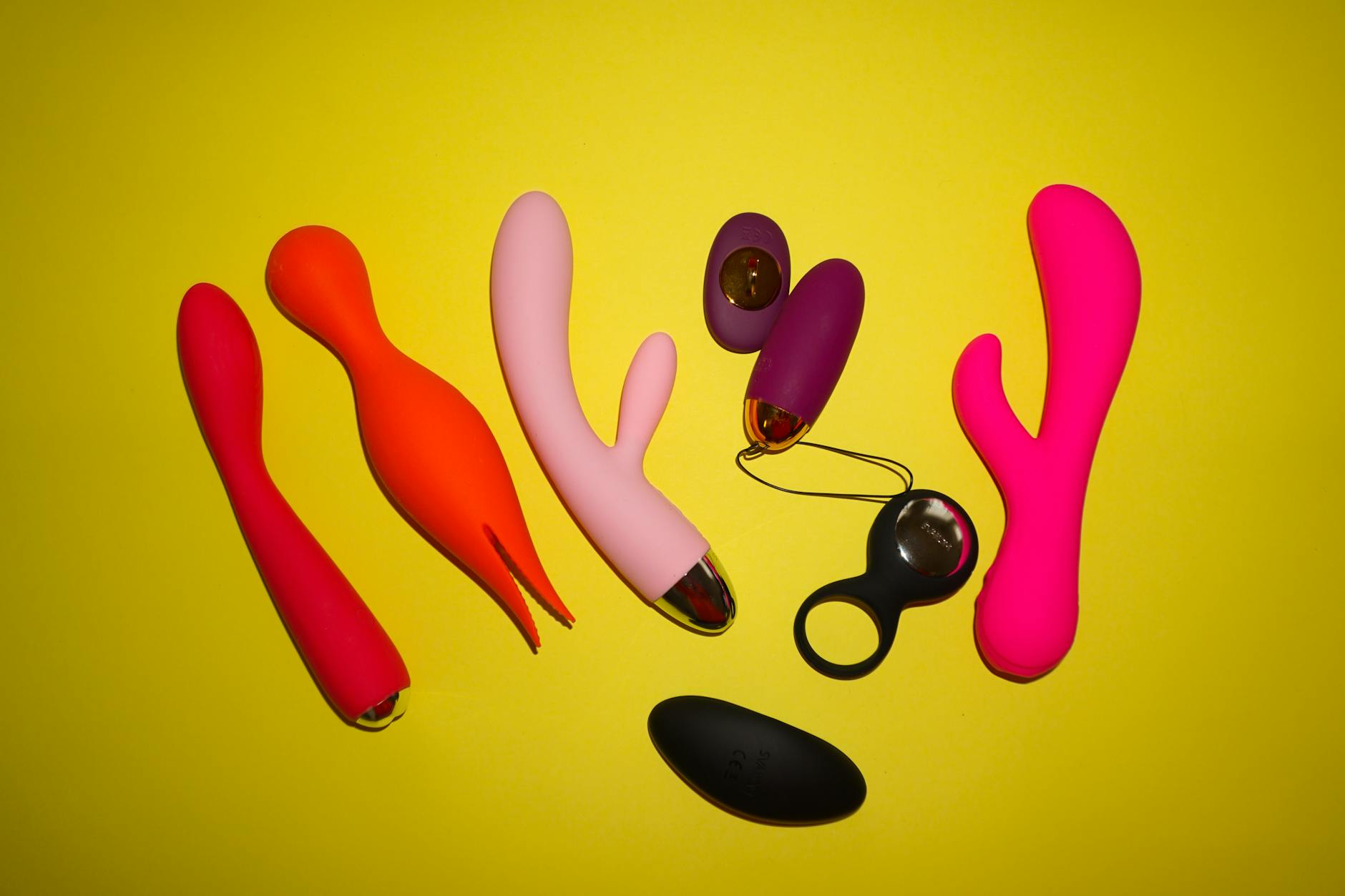
The longer you're together, the harder it gets to feel new
Let's be real. After a decade or more with the same partner, your body knows the script. You can predict the rhythm, the pressure, the timing. There's comfort in that, absolutely. But there's also a ceiling. Pleasure becomes a habit instead of a discovery. And here's the thing nobody wants to admit: that's not about your relationship being bad. It's about neurobiology. Your brain stops firing in new patterns because nothing is surprising anymore.
This is where lemon vibrators change the equation. They're not a fix for a broken relationship. They're a tool for partners who want to step outside the established pattern and feel something unfamiliar together. For long-term couples, that shift matters more than people realize.
Why familiar touch stops triggering the same response
Your body has learned your partner's touch. Every millimeter. Every tempo change. The neural pathways are so worn they feel like muscle memory. When your brain can predict pleasure, arousal actually dampens. There's less surprise, less activation, less intensity.
This is especially true if you've been together through major life transitions. Stress, illness, parenting, financial pressure, aging. All of it narrows the window of what feels good. Your partner might be exactly the same person you fell in love with, but both of your bodies have changed. Skin loosens. Sensitivity shifts. Libido fluctuates. And on top of that physiological shift, there's often emotional tiredness. You know each other too well in some ways, and not well enough in others.
A lemon clitoral vibrator introduces an element your body and brain can't predict. It's not your partner's hand. It's not motion you've felt ten thousand times. The sensation is different. The intensity pattern is different. The speed is different. For couples who've been together 10, 15, 20 years, that difference alone can unlock arousal that's been stuck.
The psychological layer that long-term couples miss
Here's something most advice skips: when you've been with someone a long time, pleasure becomes a production. You're managing their expectation. You're trying to perform the version of yourself that turns them on. You're thinking about their experience instead of feeling yours. That mental load is pleasure's enemy.
Introducing a lemon vibrator into the picture actually removes pressure because it changes whose pleasure is the focus. For the first time in years, one partner can experience sensation that's not about synchronizing with the other person. It's just theirs. And paradoxically, that creates more connection because both partners get to experience desire and vulnerability at the same time, in the same space, without managing anyone else's expectations.
I've worked with dozens of couples who've been together 15 or 20 years and didn't realize how much they'd been performing for each other. The moment one partner uses a lemon vibrator, the other partner gets to witness actual arousal instead of managed arousal. That honesty resets the whole dynamic.
What lemon vibrators do that other toys don't
Lemon suction toys work differently than vibrators. Instead of a contact vibration, they use rhythmic pressure and suction that simulates oral stimulation. For long-term couples, that distinction matters because most penetrative play or hand-based intimacy already relies on traditional vibration. Adding a completely different sensation pattern means both partners are experiencing something new, not just a variation on a familiar theme.
The lemon design itself is smart for couples play. It's elegant enough that it doesn't look clinical or intimidating. It's small enough that both partners can be close together while using it. And the sensation quality is deep enough that it often triggers stronger orgasms than what either partner has been experiencing alone. When someone has a notably stronger sensation with a partner present, it changes how they think about pleasure together.
How to introduce it without making it weird
Timing matters. You don't introduce a lemon clitoral vibrator when someone's already feeling self-conscious or distant. You introduce it as a curiosity, not a solution. "I read about these lemon toys. They work pretty differently than anything we've tried. Want to explore it together?"
The worst approach is to frame it as fixing something. "You don't get excited anymore, so I bought this." The best approach is to frame it as expanding something. "I want to feel something new with you. This looks interesting. Let's try it."
Start slow. Let one partner use it alone while the other is present and nearby. That removes performance pressure and lets the sensation build without the cognitive load of trying to sync with another person. Then, once comfort is there, the partner using it can focus on their own pleasure. The other partner gets to be fully present with desire and arousal, which actually deepens intimacy because you're witnessing each other's real response, not managing it.
The communication piece couples often skip
Long-term couples are usually terrible at talking about pleasure. You've built entire relationships on assumed understanding. "I know what you like." Except you don't, not really. Hormones change. Bodies change. Preferences change. A lemon vibrator is actually a conversation starter. "What sensation works for you? How long should I let this build? What's too intense?" These aren't sexy conversations, but they create space for actual desire to exist.
I always recommend couples talk through the basics before trying anything new together. Not in a clinical way. Just honestly. "I want to feel new sensations with you." "I've been craving something we haven't tried." "My body feels different than it used to, and I want to explore what actually works now." That honesty alone often reignites connection.
What to expect the first time
Most long-term partners are surprised by how intense the sensation is. If you're used to traditional vibration or hand stimulation, lemon suction feels distinctly different. It can feel stronger, more concentrated. That's not necessarily better or worse, just different. Your body might take a minute to adjust.
It's also common for one partner to have a noticeably stronger response the first time. That can trigger insecurity in the other person. "They've never come that hard with me." That's the conversation worth having. Because the truth is usually not that one partner is better than the other. It's that the novelty plus the lack of performance pressure equals a different kind of release. Both partners using it, trying it, exploring it together actually levels that comparison out quickly.
When a lemon vibrator unlocks something deeper
I've watched couples use lemon clitoral vibrators as a doorway to bigger conversations. Once you've introduced one form of novelty together, it becomes easier to introduce others. New positions. Different pacing. Actual vulnerability about what you each want. The vibrator isn't magic. But it does interrupt the pattern. And interrupting the pattern is where real intimacy lives.
After years together, you need something to break the script. It doesn't have to be a lemon vibrator specifically. It could be a massage. A vacation. A new position. But most couples won't initiate that shift on their own. You get too comfortable in the routine. A toy designed specifically to introduce new sensation can be the permission both partners need to step outside what's familiar and remember why they wanted each other in the first place.
FAQ
Will using a lemon vibrator make my partner feel inadequate?
Only if you frame it that way. If the conversation is "You're not enough," then yes. If the conversation is "I want to explore new things with you," the dynamic is completely different. Most partners actually feel more desired when their long-term partner is actively curious about pleasure instead of resigned to routine. The key is introducing it as an adventure you're both taking, not a problem you're solving.
How long does it take for couples to feel comfortable using it together?
It varies. Some couples feel ready in one conversation. Others need a few weeks to build comfort. There's no timeline. What matters is that both partners feel genuinely interested, not pressured. If one partner is hesitant, respect that. Pushing creates resentment. Waiting creates trust. Trust actually makes pleasure better anyway.
Can long-term couples use a lemon vibrator as their primary source of pleasure?
Absolutely. Some couples find that lemon toys work so well for them that they prefer them to other forms of stimulation. That's completely fine. Your sexuality doesn't have to match what worked ten years ago. It evolves. Honor what actually feels good now instead of clinging to what felt good before.
What if my partner isn't interested in toys at all?
Then respect that boundary. Introducing a toy without someone's genuine interest is coercive, even if unintentional. Instead, focus on other ways to interrupt the pattern. New positions, different timing, different locations, more consistent scheduling of intimacy. Sometimes what long-term couples need isn't a toy. It's permission to prioritize pleasure as a relationship investment. That looks different for every couple.
How often do long-term couples typically use lemon vibrators?
Again, it varies wildly. Some use them once a week. Some use them a few times a month. Some buy them, try them once, and set them aside. There's no "right" frequency. The only measure that matters is whether both partners feel satisfied and interested. If pleasure is fun again, you're winning. If it feels like an obligation, you're missing the point.
Do lemon clitoral vibrators actually create stronger orgasms for long-term couples?
Most of my clients report more intense sensation. But intensity isn't the only measure of pleasure. Sometimes the most valuable shift is moving from feeling nothing to feeling something. Or from performance to presence. Stronger orgasms are nice. Honest arousal is what actually transforms a long-term relationship.
The real work: reconnection
A lemon vibrator isn't a relationship repair kit. It's a tool for couples who are already choosing each other and want to rediscover pleasure together. The real work is showing up with curiosity instead of routine. Asking what your partner actually wants instead of assuming. Being willing to feel awkward while you're learning something new. That's what long-term intimacy requires.
After years together, pleasure isn't automatic anymore. It requires intention. It requires you to step outside the script and remember that your partner is still capable of surprising you. A lemon clitoral vibrator can be that permission slip. But the intimacy you're actually building is about both of you saying yes to something unfamiliar, together. That's where the real pleasure lives.