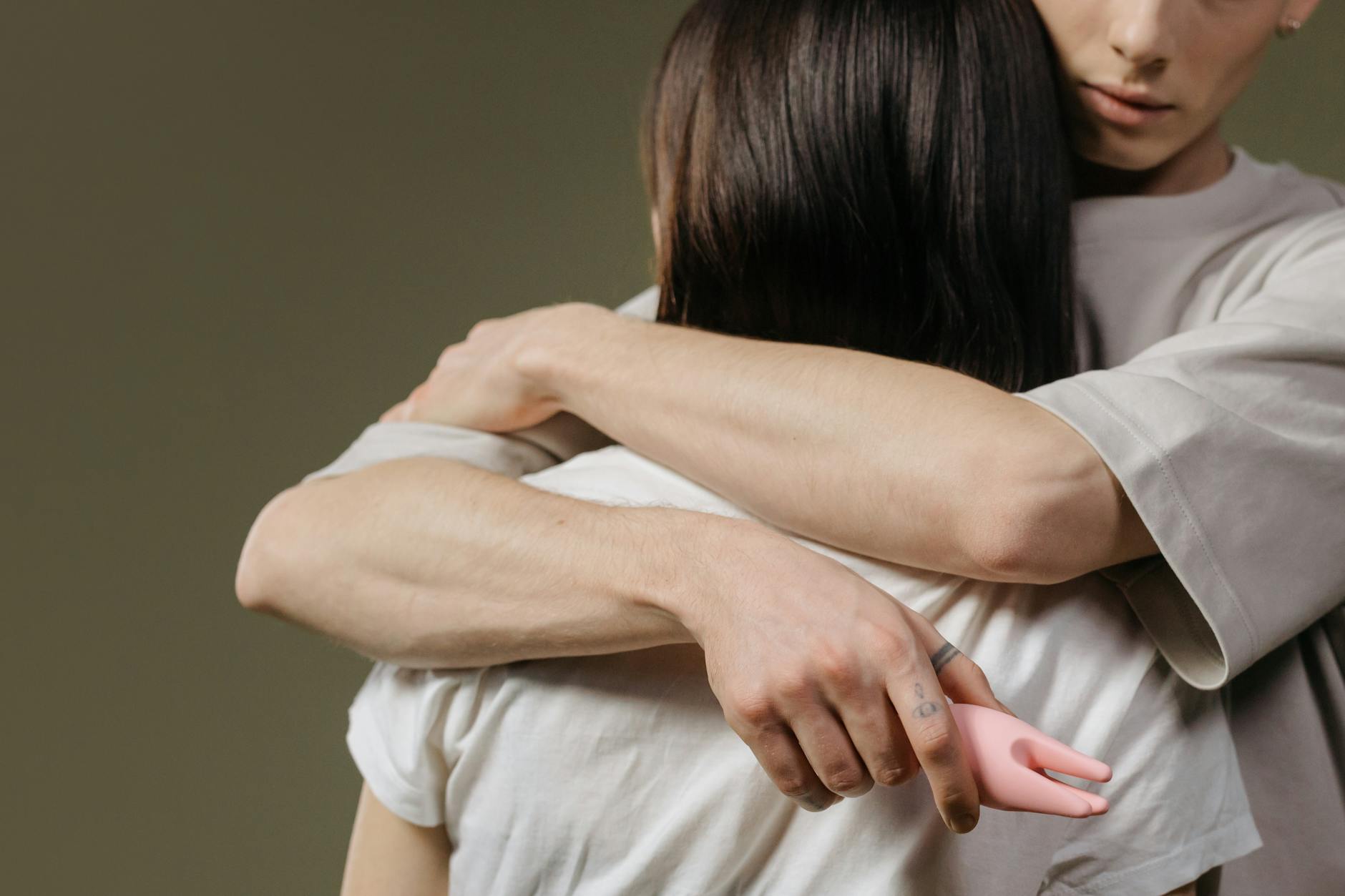
Here's what nobody tells you about your cycle and sensation
Your body is not a static thing. Every day of your menstrual cycle, your estrogen and testosterone levels shift, and those shifts change how touch feels, how quickly you aroused, and how intensely you can orgasm. If you've ever noticed that your lemon vibrator feels wildly different on certain days, you're not imagining it. Your brain and nervous system are literally experiencing a different landscape.
Most conversations about the menstrual cycle focus on mood, bloating, or energy. Nobody talks about pleasure, which is wild because pleasure changes more dramatically month-to-month than almost anything else. This is the gap I want to fill.
The follicular phase: your high-sensitivity window
Days 1 to 14 of your cycle (roughly from period start to ovulation) is when estrogen is climbing. Your body is literally becoming more sensitive to touch. The clitoral tissue has more blood flow, the pelvic floor is better supported, and your nervous system is primed for stimulation.
This is when a lemon clitoral vibrator often feels the most responsive. Arousal builds faster. Orgasms come easier. The sensation you feel from the suction is sharper, more distinct. Some people describe it as the toy "working better" during this phase, but what's actually happening is that your tissue is more responsive.
During the follicular phase, start lower. Your sensitivity is already turned up. If you typically use pattern 3 or 4 on your Lem vibrator, dial back to 1 or 2 during this window. You'll hit the same intensity ceiling faster, and you might actually prefer the subtler sensation.
This is also when you're most likely to have multiple orgasms back-to-back. Refractory time (the recovery period between orgasms) is shorter. Your capacity for pleasure is genuinely higher.
Ovulation: the intensity peak
Around day 14, ovulation happens and testosterone spikes alongside estrogen. This is a small window, maybe 12 to 24 hours, but it's noticeable.
Sensation peaks. Arousal is easiest. Many people report the most intense orgasms of their cycle happen during ovulation. Everything feels amplified. Your lemon vibrator might feel almost overwhelming if you use it the same way you did five days earlier.
This is worth tracking if you're someone who's curious about the mechanics of your own pleasure. Log when you ovulate (an app like Clue or Flo can help, or you can track cervical mucus or basal body temperature). Then notice what that day feels like with your toy. Over a few cycles, the pattern becomes clear.
During ovulation, you might experiment with higher intensity patterns or longer sessions. But you also might need less time to reach orgasm. Listen to what your body tells you. There's no "right" amount of stimulation.
The luteal phase: when everything slows down
Days 15 to 28 are the luteal phase. Estrogen drops, and progesterone rises. This is when your nervous system calms down. Touch sensitivity decreases. Arousal takes longer to build. Orgasm might feel less intense or require more direct, sustained stimulation.
Your lemon vibrator doesn't feel broken. Your body has shifted into a different mode. Many people notice they need higher intensity during this phase, or they need longer warm-up time. Your lube game also matters more during luteal days because tissue sensitivity decreases, and lubrication helps.
This phase usually lasts about two weeks, which means you're spending half your cycle in a different pleasure landscape than the follicular phase. That's significant, and it's worth knowing.
During luteal, consider adding a water-based lubricant even if you don't usually use one. The combination of suction plus lube creates a different sensation profile that many people find more satisfying when their body's baseline sensitivity is lower. See the guide on how to use a lemon vibrator with lubricant for sensitive areas for practical tips.
Menstruation: the wildcard
Your actual period is weird because it's got multiple things happening at once. Estrogen is at its lowest point in the cycle. The pelvic floor might feel tender. But also, increased pelvic blood flow can make clitoral stimulation feel particularly good for some people.
There's no universal experience here. Some people want zero touch during their period. Others find that their lemon vibrator feels incredible. Some people fall somewhere in between.
The practical piece: if you do want to use your vibrator during menstruation, you can. The toy is waterproof. If you're in the bath or shower, that's fine. If you're not menstruating heavily that day, you're also fine using it on the bed. Just rinse the toy afterward with warm water and mild soap. (Full cleaning instructions are here.)
Don't let anyone make you feel weird about wanting pleasure during your period. Your body, your choice.
What hormonal birth control actually changes
If you're on hormonal birth control, this whole conversation shifts. Most hormonal contraceptives (pills, patches, rings, implants) suppress your natural hormone fluctuations. You're not cycling through those peaks and valleys anymore. Instead, you're on a steady dose of synthetic hormones.
Many people on hormonal birth control report that pleasure feels more consistent month-to-month. No wildly different days. No sensitivity peaks. Just a baseline.
Some people prefer this. Others miss the intensity variation and feel like their pleasure is dampened overall. Both are valid. If you're considering switching contraception methods and you care about sensation changes, that's worth discussing with your provider.
For some people, a lemon clitoral vibrator works better when they're off hormonal birth control because the sensation variation keeps things interesting. For others, the consistency of hormonal contraception feels better. There's no one answer. Pay attention to what feels true in your own body.
How to track your own pleasure cycle
Here's a simple way to notice patterns without obsessing.
For one full cycle (28 to 35 days), log three things: (1) where you are in your cycle, (2) how quickly your lemon vibrator seemed to "work," and (3) how intense the sensation felt. You can use a notes app, a calendar, or even a spreadsheet.
After one cycle, patterns usually emerge. You'll likely notice that the follicular phase and ovulation feel different from the luteal phase. You'll probably see that arousal builds faster during the first half of your cycle.
This isn't about optimizing yourself or aiming for peak pleasure every day. It's about understanding your own nervous system so you can work with it instead of against it. Some days your body is primed for quick, intense pleasure. Other days you need longer warm-up and different stimulation. Both are normal.
The emotional and relational piece
Hormone changes affect more than just tissue sensitivity. They affect desire, comfort with vulnerability, and how you experience connection.
During the follicular phase, many people feel more socially confident and sexually assertive. During the luteal phase, the same person might want quieter, more intimate touch or solo time. This isn't a personal failure. It's your nervous system doing exactly what it's supposed to do.
If you have a partner, knowing this matters. It's not "sometimes you want sex and sometimes you don't." It's "my body has a rhythm, and my needs shift with it." That distinction takes the shame out of it.
Your pleasure matters throughout your entire cycle, even on the days when sensation is lower or arousal takes longer. A lemon vibrator or any clitoral vibrator is just a tool. The tool works best when you know what your body needs from it, and that need changes.
When to see someone if things feel off
If your cycle-based pleasure changes are extreme (like complete numbness during luteal, or pain during ovulation), that might warrant a conversation with a gynecologist or a sex therapist. Sometimes hormonal imbalances, pelvic floor tension, or medication side effects create sensation changes that go beyond normal cycling.
But normal? You're supposed to feel different throughout your cycle. That's the whole point. Your body is supposed to have seasons.
Your pleasure has a rhythm. The question is whether you're paying attention to it.
FAQ: Hormonal changes and sensation
Q: Does my birth control pill affect how my lemon vibrator feels?
Yes. Hormonal birth control suppresses the natural hormone fluctuations that create sensation variety throughout the month. You're likely to feel more consistent pleasure (no peaks and valleys) but potentially less intense overall. Some people prefer this. Others feel their pleasure is flattened. It's individual.
Q: Why does my clitoral vibrator feel amazing one week and barely work the next?
Your hormones shift dramatically month-to-month. During the follicular phase (days 1 to 14), estrogen is climbing and your nervous system is more sensitive. Arousal builds faster and orgasms feel more intense. During the luteal phase (days 15 to 28), progesterone rises, sensitivity decreases, and you need more time and stimulation. This is normal and not a sign that your toy is broken.
Q: Can I use my lemon vibrator on my period?
Yes, it's completely safe. The toy is waterproof, so shower use is fine. If you're in bed, just rinse the toy with warm water and soap after. Your choice whether you want stimulation during your period. Some people do, some don't. Both are okay.
Q: Is it normal for orgasms to feel stronger during ovulation?
Completely normal. Ovulation is when testosterone peaks alongside estrogen. This is literally the most hormonally intense moment of your cycle. Orgasms often feel more powerful, arousal is easiest, and pleasure is most intense. This is also why it's a common moment for people to seek out their lemon clitoral vibrator more intentionally.
Q: Do I need to change how I use my vibrator based on my cycle?
You might want to. During the follicular phase, start lower than usual because your sensitivity is already high. During the luteal phase, you might need higher intensity or longer warm-up. But there's no prescription. Some people don't notice meaningful differences. Others notice huge variation. Pay attention to what your body tells you.
Q: Why does lube matter more during certain parts of my cycle?
During the follicular phase, your body produces more natural lubrication, so tissue sensitivity is higher and arousal builds faster. During the luteal phase, natural lubrication decreases and tissue sensitivity drops. Adding a water-based lube during this phase makes sensation more pleasurable without requiring more intense vibration. It's a practical tool that matches what your body is actually doing.
The takeaway
Your lemon vibrator isn't changing. Your body is. That rhythm isn't a bug. It's a feature. Understanding it means you can work with your cycle instead of feeling frustrated when pleasure doesn't feel the same every day. Some days your body is primed for quick, intense sensation. Other days it needs something different. Both are your baseline normal.