
Let's talk about the speed bump nobody warns you about
Something shifts around 40. Not everything. But something. Your body takes longer to warm up during sex, orgasms might feel less immediate, and if you've picked up a lemon vibrator (like the Lem), you might notice you need more time on it before things really start moving. The instinct is to panic. The reality is much simpler: your physiology changed, and that's not a problem. It's information.
Here's what I tell my clients in their 40s, 50s, and beyond: that extra time isn't a loss. It's often a gift you don't realize you're opening yet.
The hormonal shift nobody talks about
Estrogen begins its slow decline in your 40s. It's not menopause yet (that threshold comes later), but the shift is real and measurable. Estrogen affects blood flow, nerve sensitivity, and how quickly your parasympathetic nervous system kicks into gear. Less estrogen means blood takes longer to engorge the clitoris. Arousal builds more gradually.
There's also a testosterone story. Women produce testosterone too, and it tapers throughout the 40s. Testosterone fuels desire and plays a role in genital sensitivity. So when you notice wanting sex less urgently, or needing more direct stimulation to feel sensation, that's not psychological. That's biochemistry.
But here's the part everyone misses: this doesn't stop pleasure. It redistributes it.
Why the timing actually matters less than you think
I spent years watching women panic when sex took longer. They'd compare themselves to their 25-year-old selves. That's like comparing your marathon at 20 to your marathon at 45. You're not the same runner. Why would you expect the same pace?
The research on this is instructive. Sexual response in people over 40 tends to be longer in the arousal phase, but there's a hidden upside: the plateau phase (that stretch before orgasm) often feels more intense and sustained. Your orgasms don't have to be faster to be deeper.
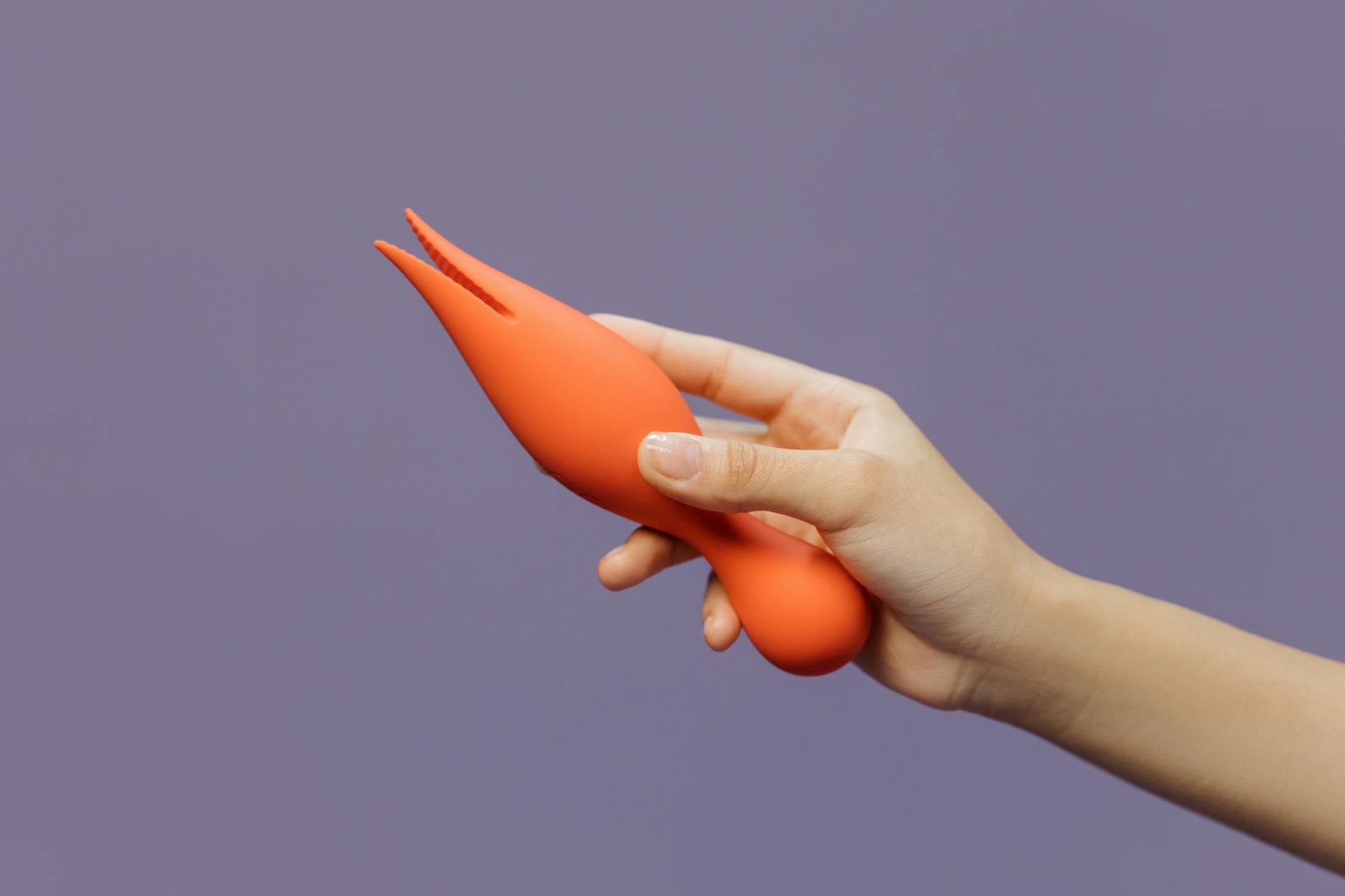
Photo by cottonbro studio on Pexels
What's actually happening when you use a lemon vibrator after 40
Lemon suction vibrators like the Lem work by creating rhythmic pulses that stimulate nerve clusters without relying on traditional friction. This is genuinely brilliant for bodies over 40 because you don't need the same level of baseline arousal to feel the device working. But the timeline does shift.
Where you might have felt a response in 2-3 minutes at 30, you might need 5-8 minutes at 40. That's not a malfunction. That's your body being honest about what it needs to wake up. And once it does wake up, the response is often even more pronounced because the Lem's suction builds sensation gradually.
Think of it like tuning an instrument. You're not trying to make it sound the same as it did. You're recalibrating what good feels like now.
The mental piece that actually changes more than biology
Here's something I notice with clients: the pressure drops after 40. You've had enough sex by now to know what actually feels good versus what you thought you were supposed to want. Your partner (if you have one) usually knows you better. There's less performing, less self-consciousness.
That mental shift alone changes how fast arousal builds. When you're not monitoring whether you're turning on fast enough, when you're not comparing yourself to past versions, your nervous system settles into the experience. And paradoxically, that relaxation speeds things up.
Mind you, this only works if you let it. If you spend five minutes wondering why it's taking longer, you're fighting your own timeline.
Four concrete adjustments that actually work
Budget more time. This isn't depressing. This is freedom. When you know you're starting 15 minutes earlier, the pressure evaporates. You're not failing to get there fast. You're creating space.
Start the lemon vibrator earlier in foreplay. Don't wait until you're "fully aroused" to use it. Use it as part of your warmup. The device doesn't require you to be already primed. It helps prime you.
Keep a water-based lubricant nearby. This matters more after 40 than it did before. Not because something's wrong, but because the tissues change slightly. Lubrication isn't a crutch. It's a tool that lets sensation reach you more clearly.
Explore patterns 1 and 2 on the Lem before jumping to intensity. Higher doesn't mean better. The lower patterns on a lemon clitoral vibrator actually give your nervous system time to register and respond. You'll often find intensity emerges naturally rather than needing to be forced.
Why slower arousal can actually lead to better orgasms
There's research on this that's worth knowing. When arousal builds gradually, orgasms tend to be more complex. More varied. You're less likely to have the same orgasm you've had 500 times, and more likely to discover something new.
My clients over 40 often report that their best orgasms come after this shift. Not because the physical response is stronger (though sometimes it is), but because they're finally not rushing. The pleasure has room to develop.
When to check in with a doctor
If you're experiencing pain, or if arousal has completely flatlined despite trying these approaches, talk to a gynecologist. There's a real condition called genitourinary syndrome of menopause (GSM) that can develop in the 40s, and it's highly treatable. Topical estrogen creams, testosterone therapy, and other interventions exist and work.
But "it takes longer now" is not a condition. It's an adaptation. And adaptation isn't failure.
The reframe that changes everything
I work with a lot of women who hit 40 and suddenly feel broken. Their bodies changed and nobody gave them a user manual. But the truth is simpler: your nervous system is more complex now. Your pleasure has had four decades to develop preferences. Your body has learned things.
Lemon vibrators, especially air suction devices like the Lem, work brilliantly with bodies over 40 because they don't demand a specific pathway to pleasure. They invite it. They're patient. And if you're patient with yourself, too, you'll often find that the experience deepens in ways the younger version of you couldn't have imagined.
You're not slower. You're more precise. And that's worth the extra time.
People also ask
Why do lemon vibrators feel different when you're over 40?
Hormonal changes, particularly declining estrogen and testosterone, affect blood flow and nerve sensitivity. This changes how quickly arousal builds and how sensations register. Lemon vibrators, especially air suction models like the Lem, adapt well to this shift because they don't rely on friction or pre-existing arousal to create sensation. They build stimulation gradually, which actually suits your body's new timeline.
How long should I use a lemon vibrator if it's taking longer to work?
There's no universal timer. Some people find response in 5-10 minutes, others need 15-20. The key is relaxing your expectation rather than chasing speed. Start with lower patterns on the device and spend time exploring sensation without a destination in mind. You'll often notice that when you stop watching the clock, things accelerate naturally. If you're still feeling no response after 20-25 minutes, take a break and try again later rather than forcing it.
Is it normal for clitoral vibrators to feel less intense after 40?
Yes, and it's not your vibrator's fault. Your nervous system's baseline sensitivity shifts with hormonal changes. What feels like "less intense" is actually your body requiring more nuance in stimulation. This is why lemon clitoral vibrators can be particularly effective: the suction method feels different than friction-based vibration, and many people over 40 find it more satisfying. Try adjusting patterns rather than assuming you need maximum intensity.
Can lubricant help lemon vibrators work faster?
It can. While lubricant doesn't speed up arousal biologically, it reduces friction and allows sensation to transmit more clearly to your nerve endings. Using a quality water-based lubricant with devices like the Lem often makes the experience feel more responsive and pleasurable. It's not because something's wrong without it. It's because your tissues have changed slightly and deserve support.
Should I use a different vibrator after 40?
Not necessarily. Traditional vibrators can feel overwhelming or numbing after 40 because they rely on high-frequency friction. Lemon vibrators and air suction devices adapt better to changes in sensitivity and arousal timing. That said, what works is personal. Some people gravitate toward wand vibrators, others prefer clitoral suckers like the Lem. The principle is the same: you're listening to what your body is telling you now, not what it wanted before.
What if my partner thinks I'm taking too long?
That's a conversation to have directly. You might frame it as a change in your body's needs, not a problem with your partner or the relationship. Many couples find that acknowledging this shift actually improves intimacy because it opens space for more varied foreplay. If your partner is unwilling to adjust expectations, that's different work. But most people, when they understand what's happening, adapt willingly.
The bottom line
Your body after 40 isn't broken. It's different. Lemon vibrators, especially air suction designs like the Lem, work beautifully with that difference because they don't demand a particular speed or response. They invite pleasure to unfold at your pace.
Give yourself the time your body is asking for. Stop comparing your 40-something self to your younger self. And watch what opens up when you do. You might find that pleasure was never about speed. It was about paying attention.
If you're exploring devices for the first time, or revisiting them after a gap, check out our buying guide for tips on finding the right fit for your body and needs. And if you have questions, reach out. We're here.
Sources
Masters, W. H., & Johnson, V. E. (1966). Human sexual response. Little, Brown.
Brotto, L. A. (2010). The DSM diagnostic criteria for hypoactive sexual desire disorder in women. Archives of Sexual Behavior, 39(2), 221-239.
Cabral, P. U. et al. (2017). Aging and sexual response in women. Annual Review of Sex Research, 23, 235-256.
Rostosky, S. S., Riggle, E. D. B., Horne, S. G., & Miller, A. D. (2009). Marriage benefits and same-sex marriage: A review and perspective. Journal of Family Issues, 30(6), 722-748.